Pavillons des principales puissances
/vexillology/atlas/1863
About
Pavillons des principales puissances is a French colour plate associated with the Encyclopédie militaire et maritime. It sets out the flags of the French Empire and of the foreign powers as its publisher understood and labelled them in the early 1860s.
This page catalogues the plate as a historical source. Printed headings and captions are transcribed as printed, with the plate's capitals normalized to mixed case and accents restored; an English rendering follows each transcription in italics. The printed labels do not by themselves establish that every depicted design was official, current, or colour-accurate at the time of publication.
Source Catalogue
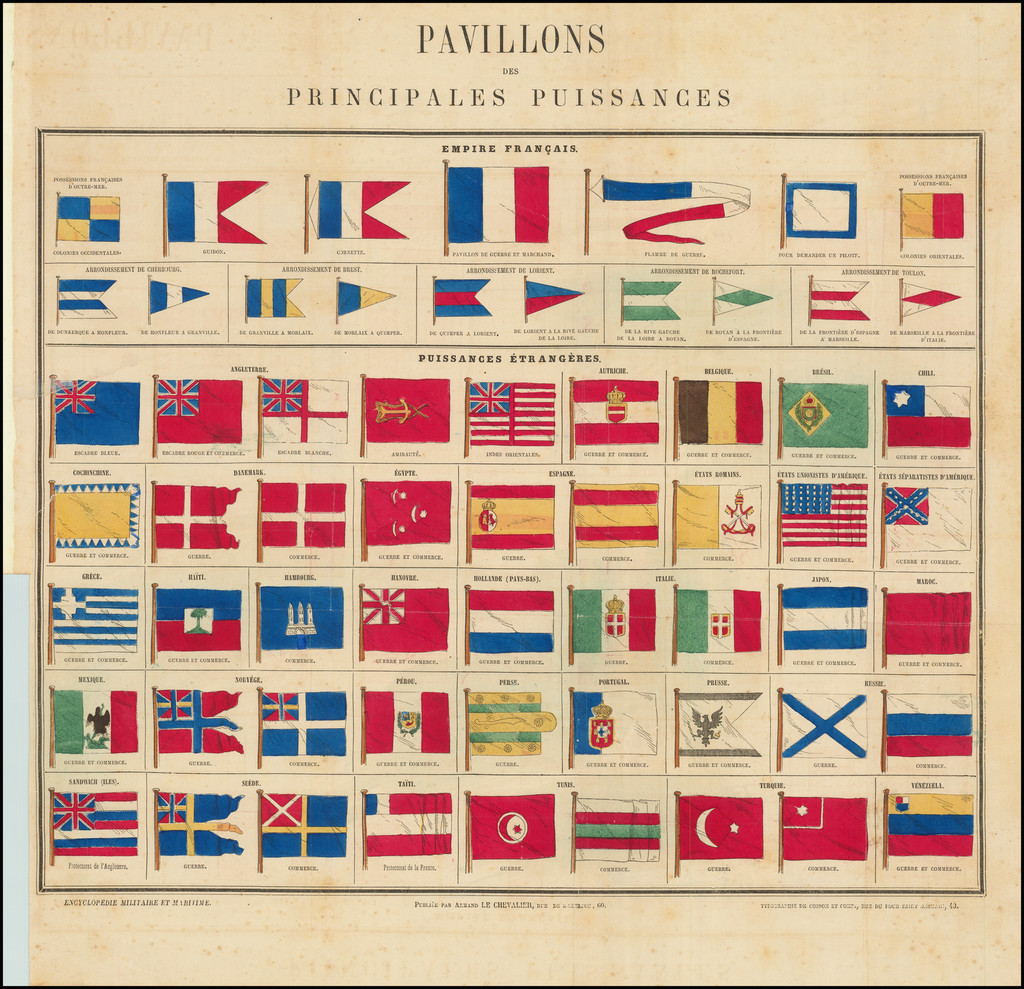
| Printed title | Pavillons des principales puissances |
|---|---|
| Collection date | c. 1863 (assigned). No date is printed on the plate. The prior cataloguing at the time of acquisition gave c. 1862; the date is revised here on internal evidence (see below). |
| Associated work | Encyclopédie militaire et maritime: Dictionnaire des armées de terre et de mer |
| Publisher | Armand Le Chevalier, 60 rue de Richelieu, Paris |
| Printer | Typographie de Cosson et Comp., 43 rue du Four-Saint-Germain, Paris |
| Creator of plate | Not stated on the plate |
| Language | French |
| Format | Colour illustration on a printed plate; the exact production process has not yet been established |
| Physical extent | One illustrated sheet; dimensions not yet recorded |
| Provenance | Acquired by purchase. The prior cataloguing dated the plate c. 1862 and described its contents as naval flags. Fuller provenance not yet recorded. |
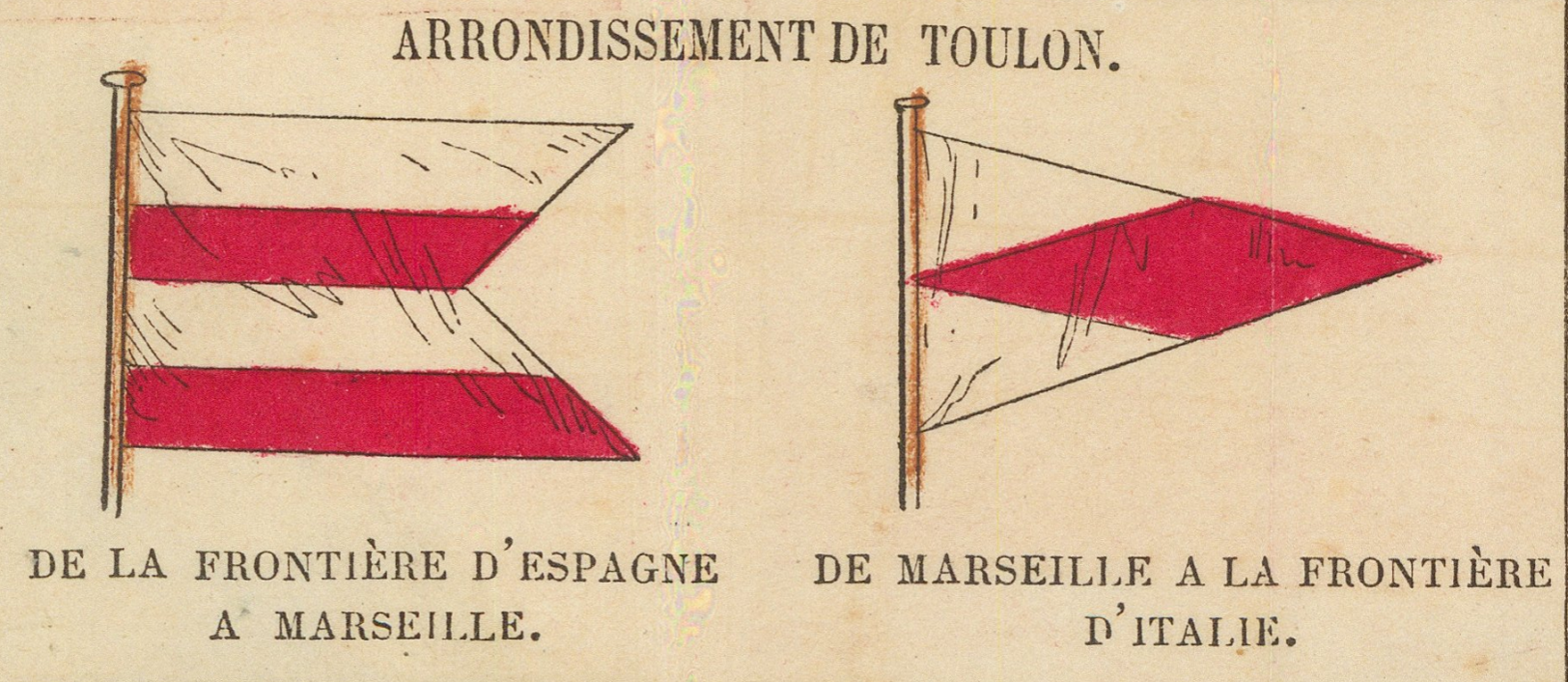
| Contents | 62 flag drawings arranged in 49 extracted panels: 12 panels under Empire français and 37 under Puissances étrangères |
| Digital surrogate | Complete plate: JPEG, 1024 × 989 pixels. Extracted panels: PNG. |
| Catalogue status | Preliminary. Bibliographic attribution and individual flag analysis remain subject to revision. |
Editorial convention: Historical names are retained because they are evidence of the source's terminology. Modern identification and analysis will be added separately, without silently replacing the printed labels.
Internal Dating Evidence
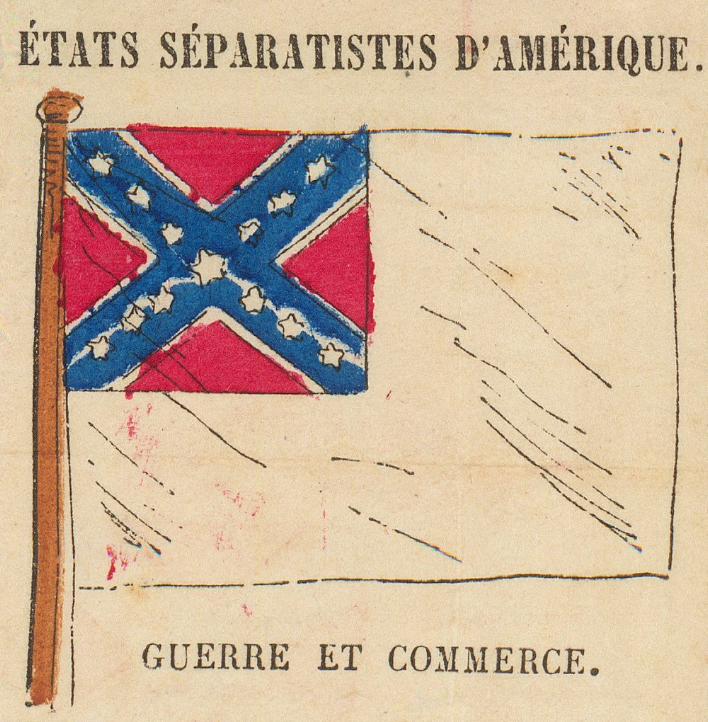
The flag printed for the États séparatistes d'Amérique is the second Confederate national pattern (the “Stainless Banner”), adopted on 1 May 1863. The plate therefore cannot have been prepared before mid-1863, which rules out the c. 1862 date given in the prior cataloguing.
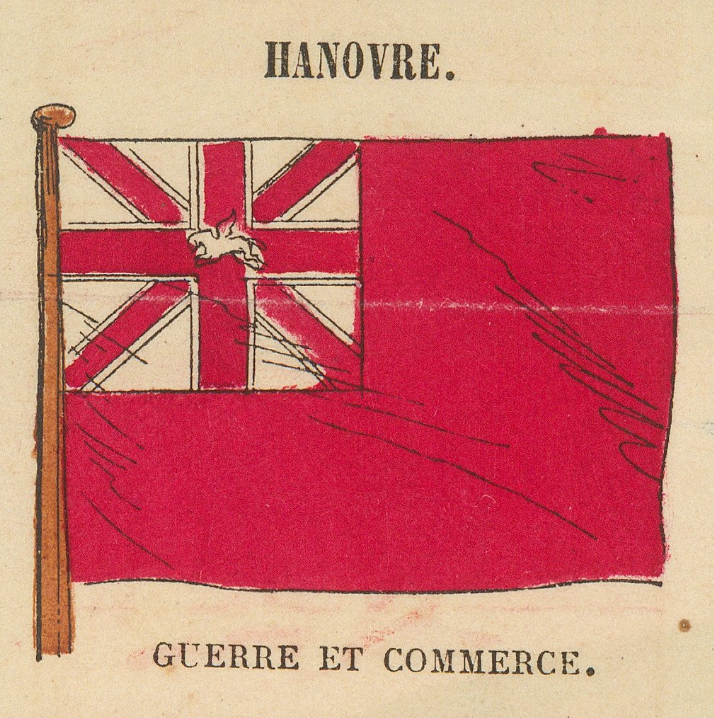
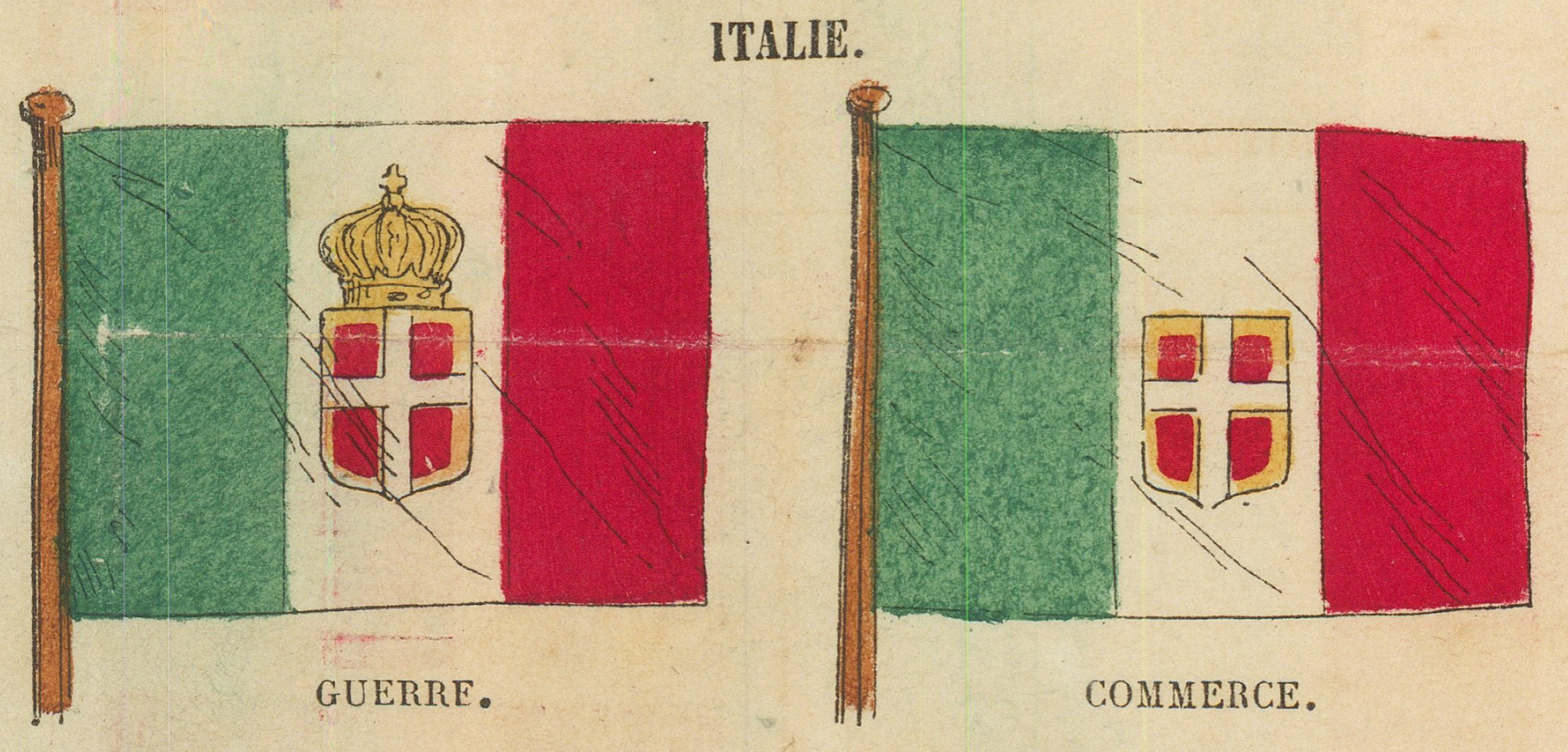
Printing the unionist and separatist flags as a pair points to a plate prepared before the war ended in 1865. The rest of the sheet agrees: one flag for the Kingdom of Italy, proclaimed in 1861; a flag of its own for Hanover, annexed by Prussia in 1866; and the heading Empire français, which held from 1852 to 1870. Together these bracket the plate to about 1863–1865 and support the assigned date of c. 1863.
Index of Flag Panels
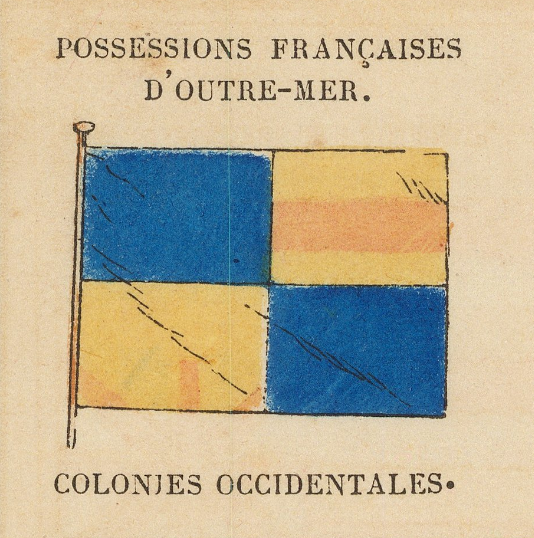
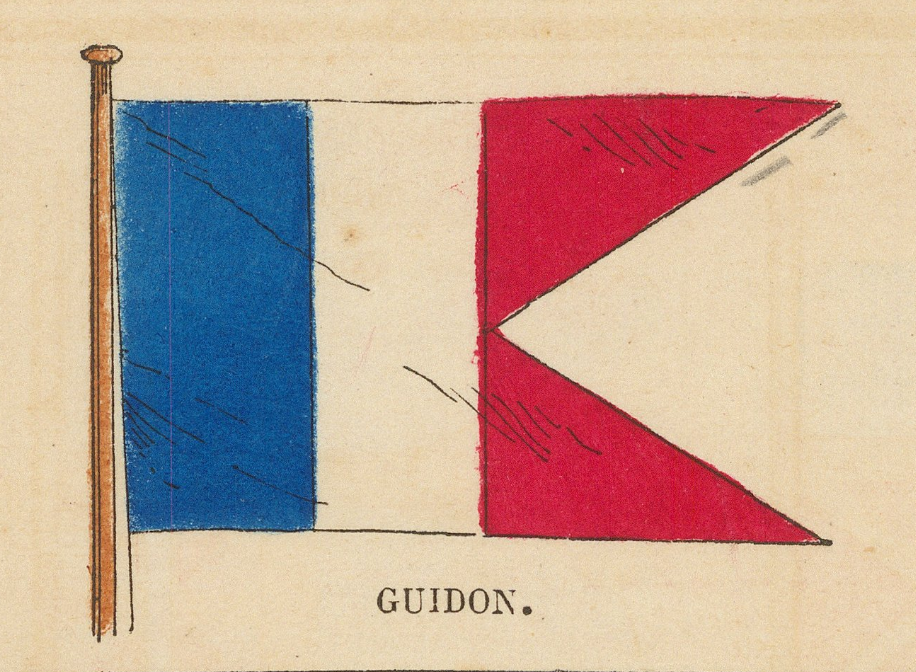
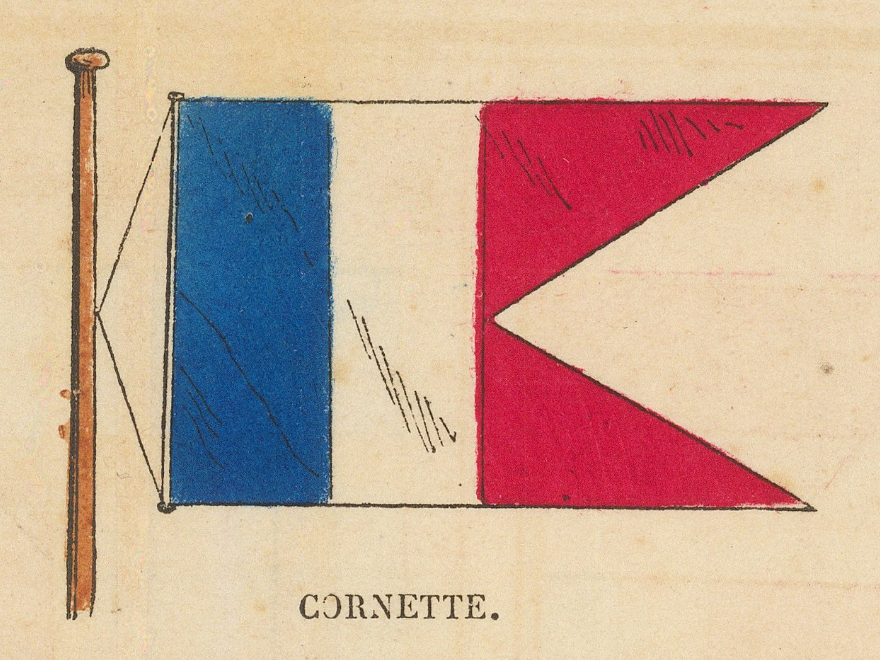
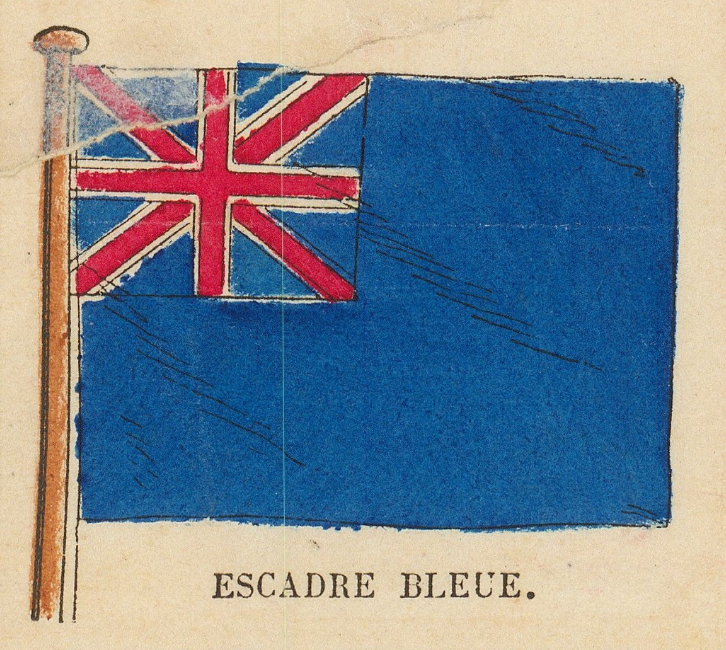
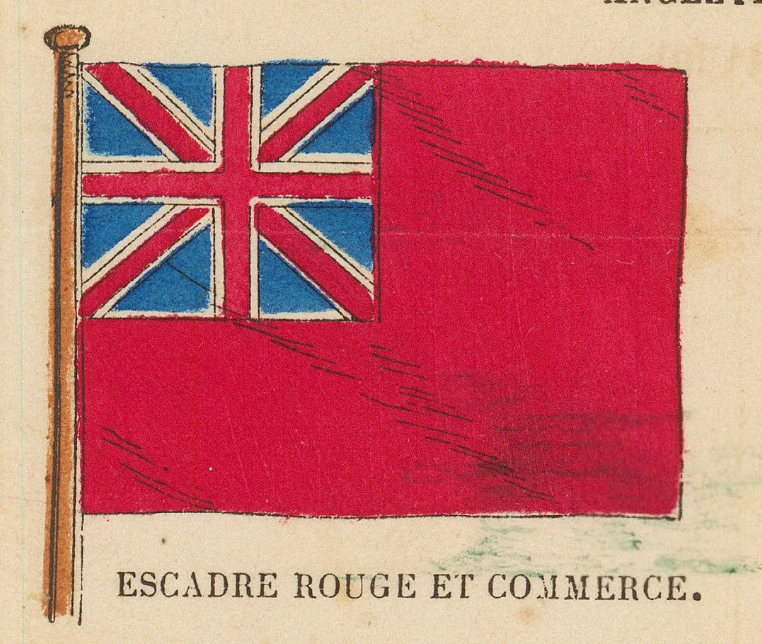
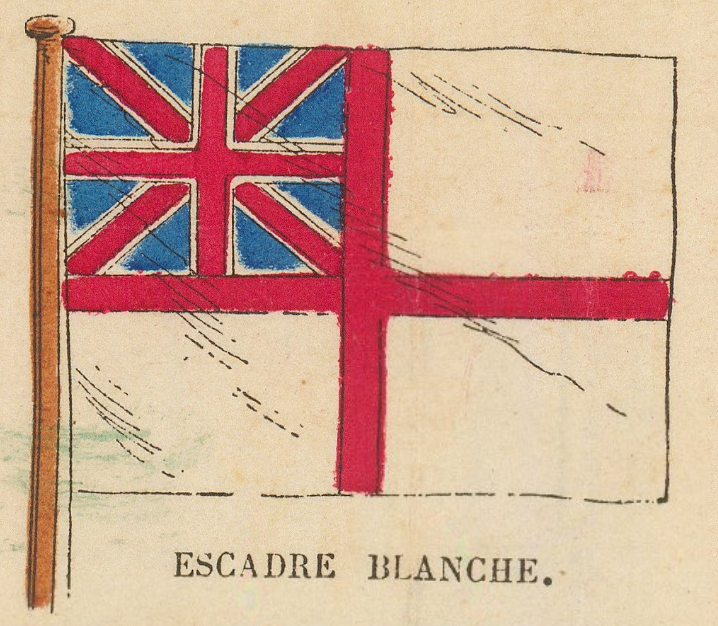
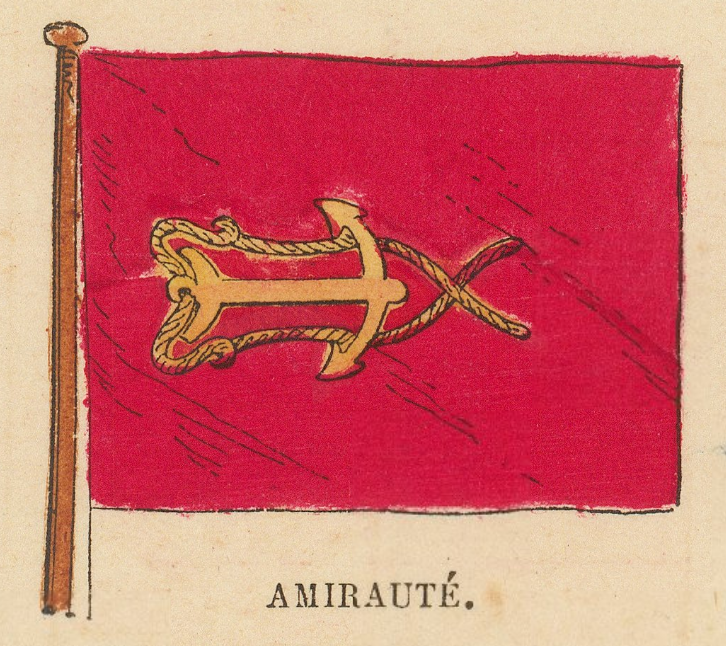
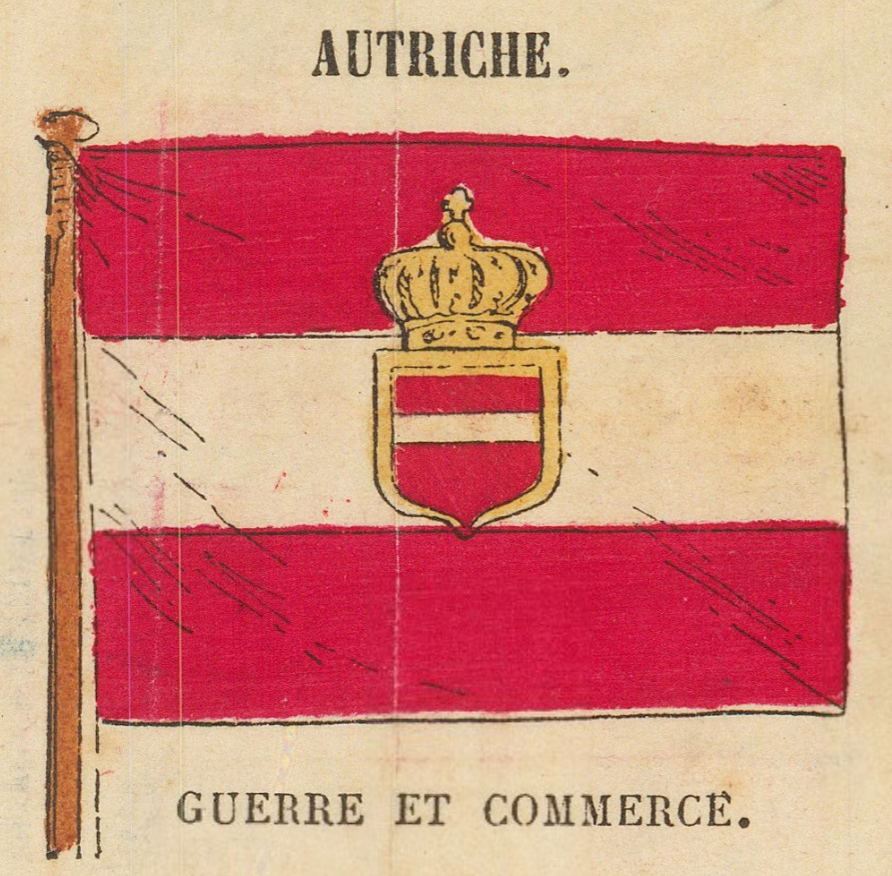
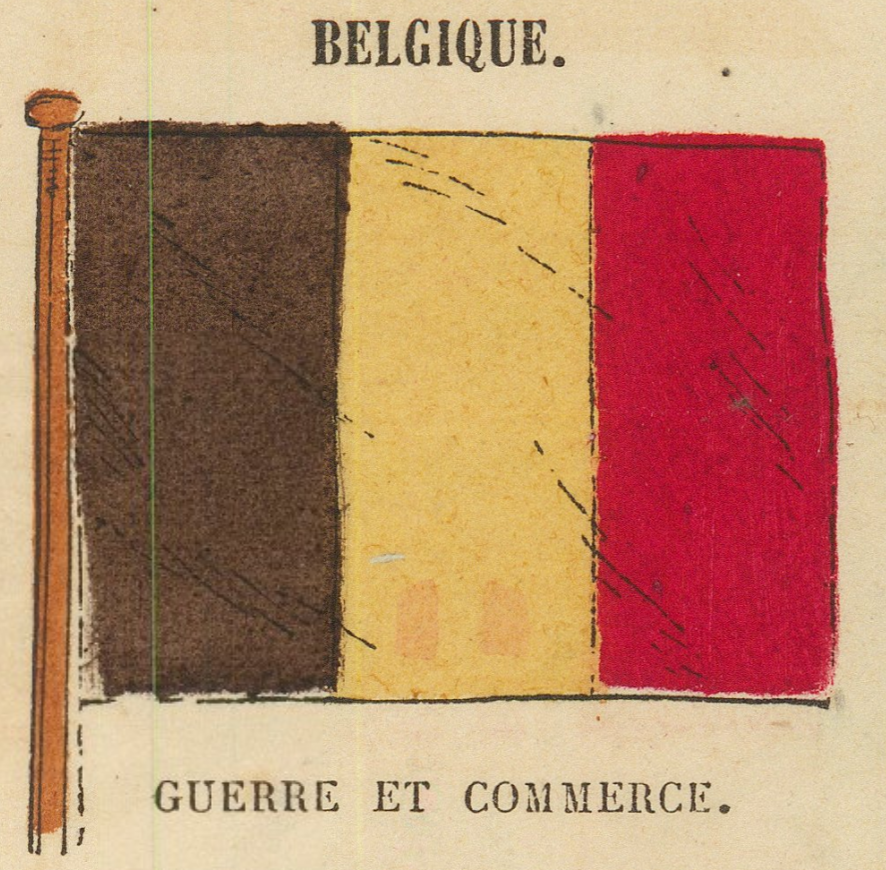
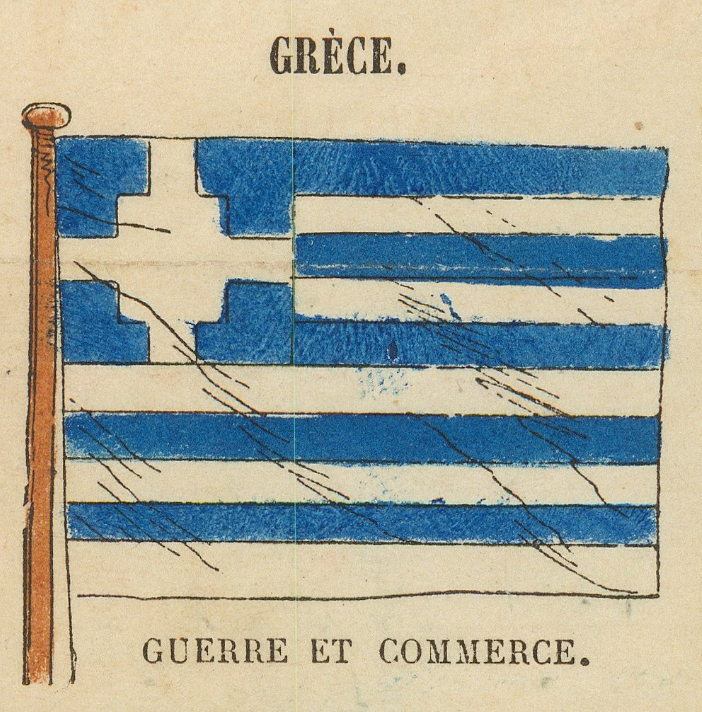
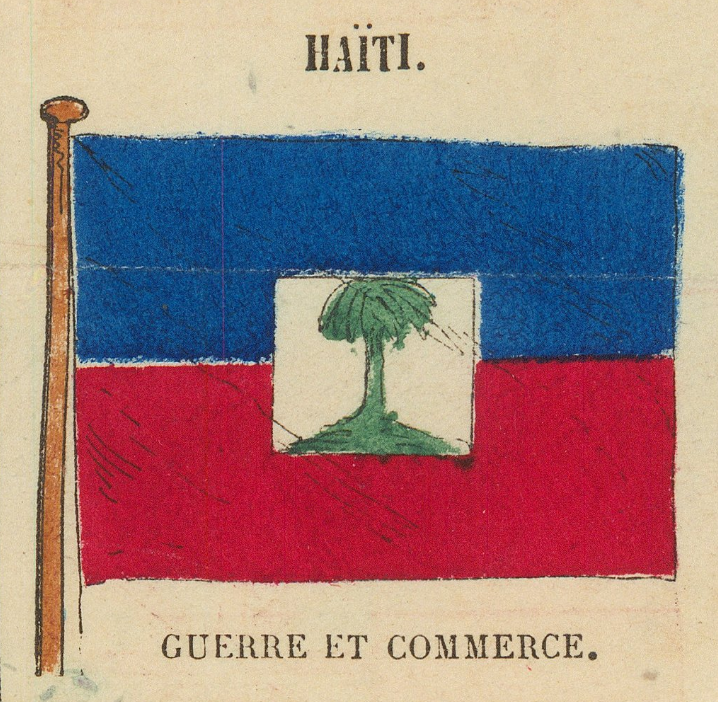
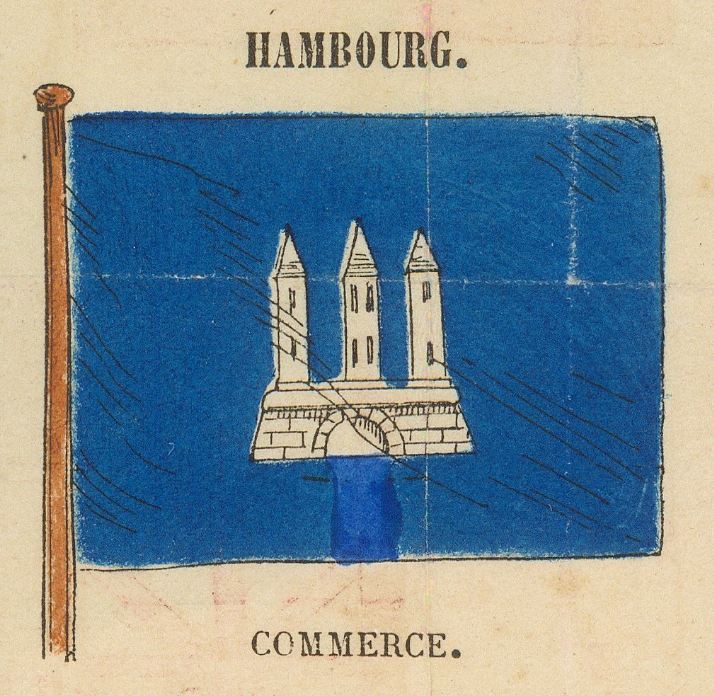
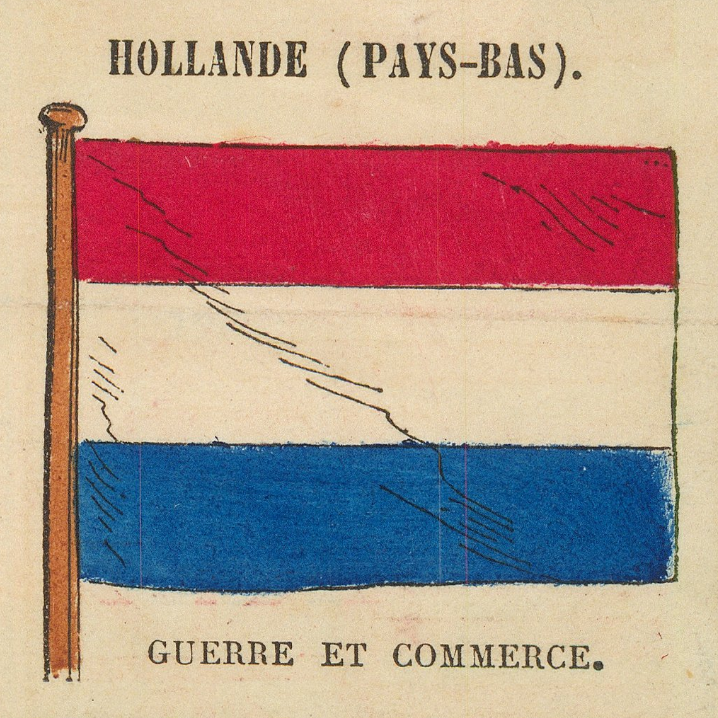
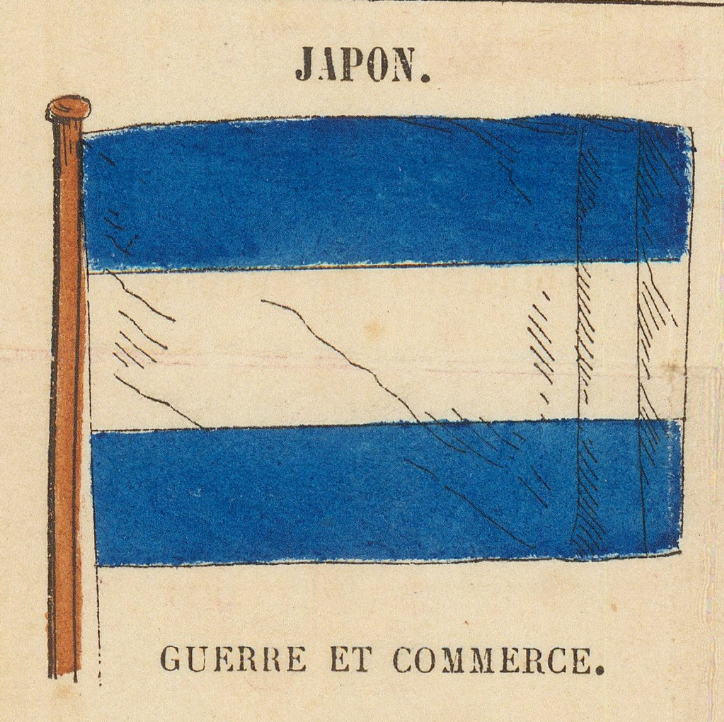
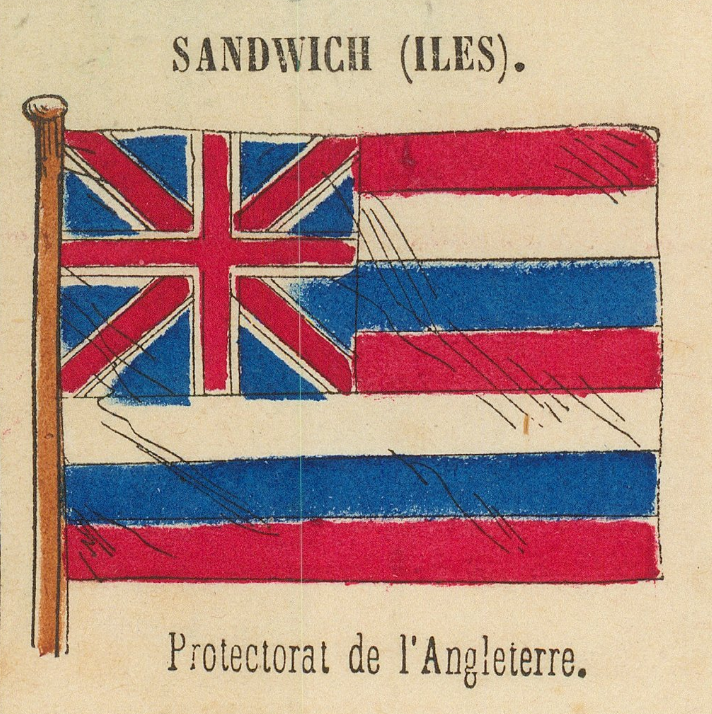
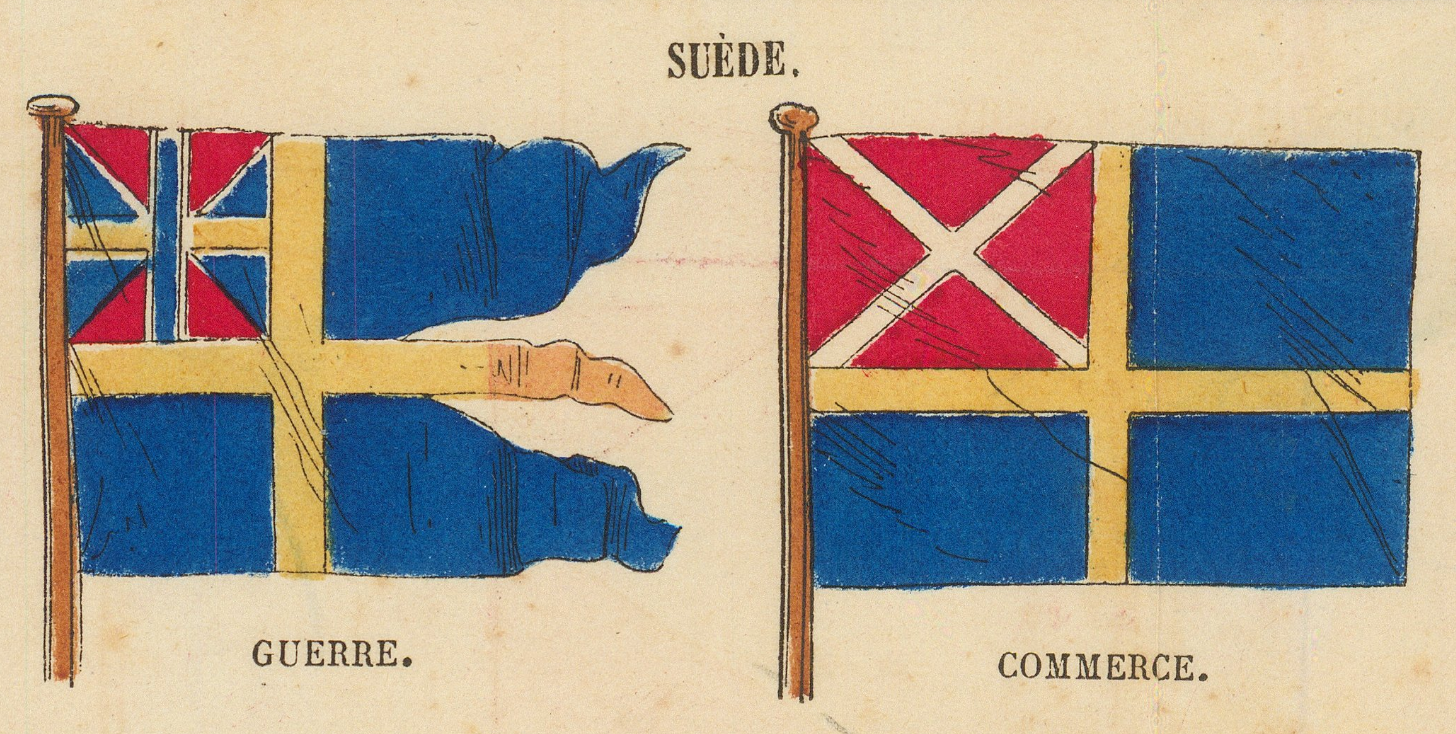
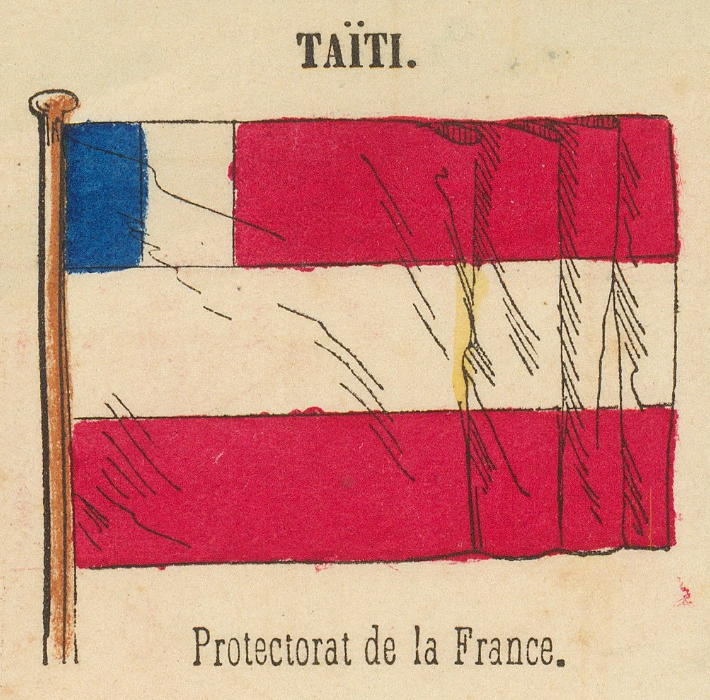
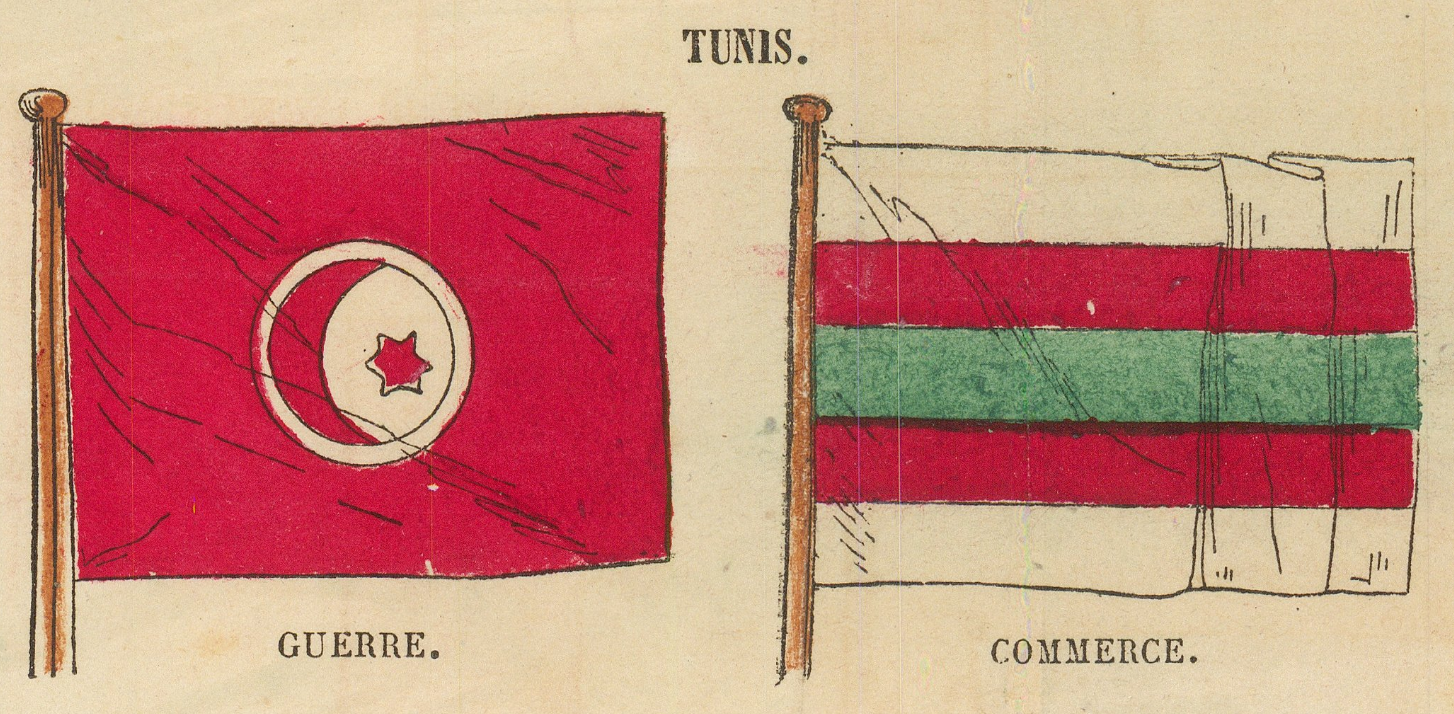
The plate contains 49 extracted panels. Thirteen panels contain two distinct flag drawings, producing 62 drawings in total. Panels are presented in the two divisions printed on the plate, in the order in which they appear there, read left to right and top to bottom. Where a panel contains two drawings, both printed captions are given, separated by a middle dot. Select any image to open the full-resolution extraction.
Empire français · Puissances étrangères
Empire français
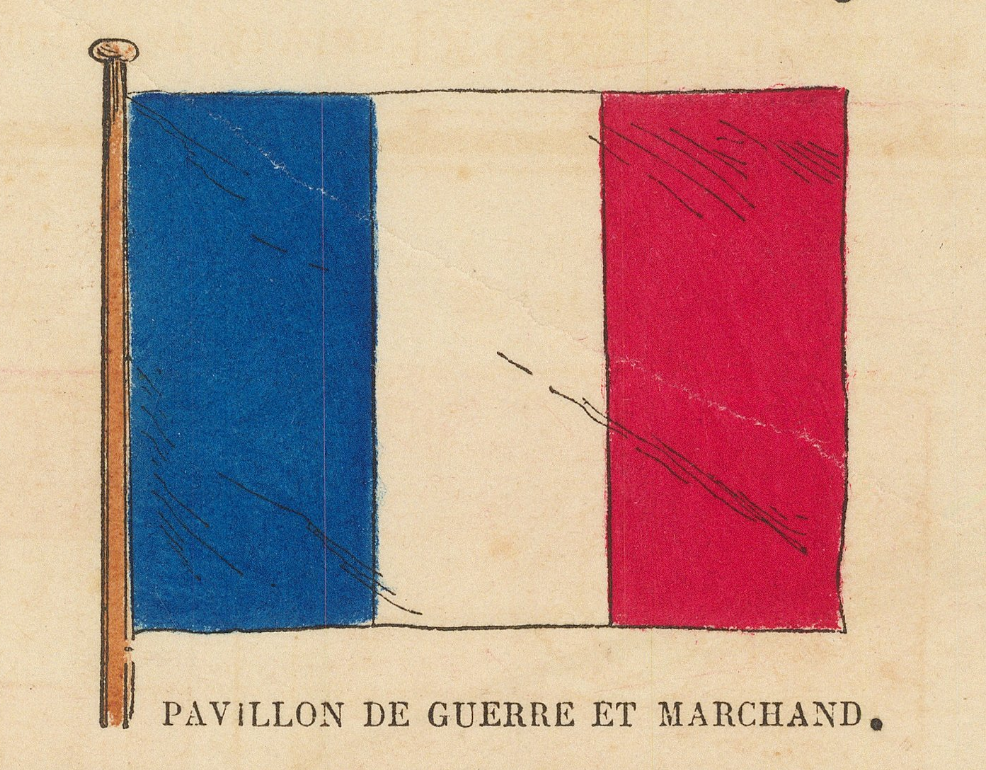
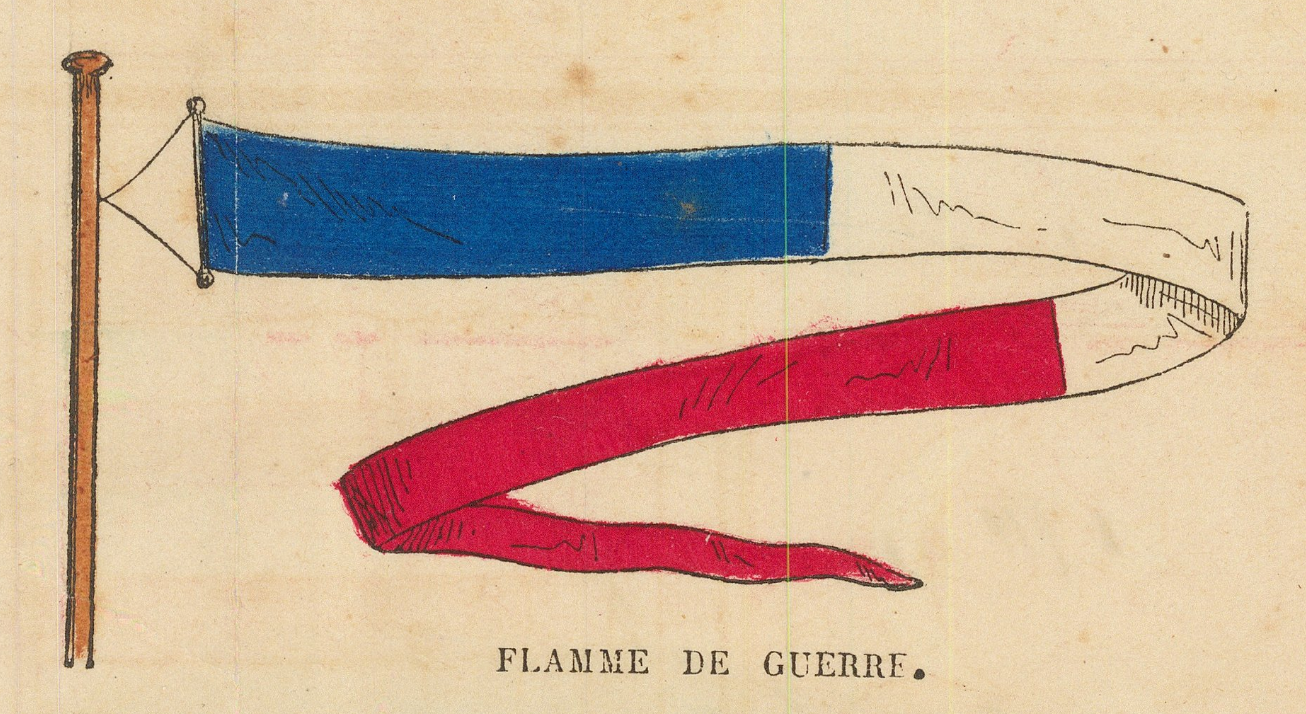
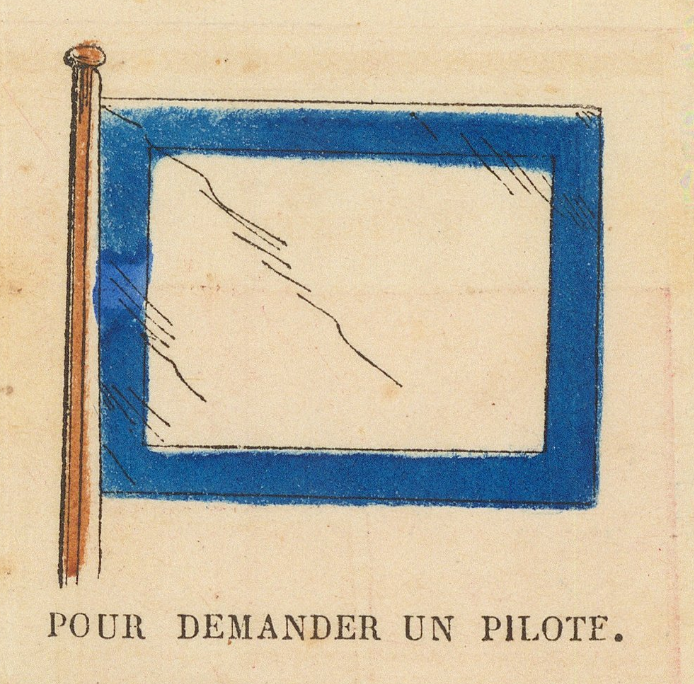
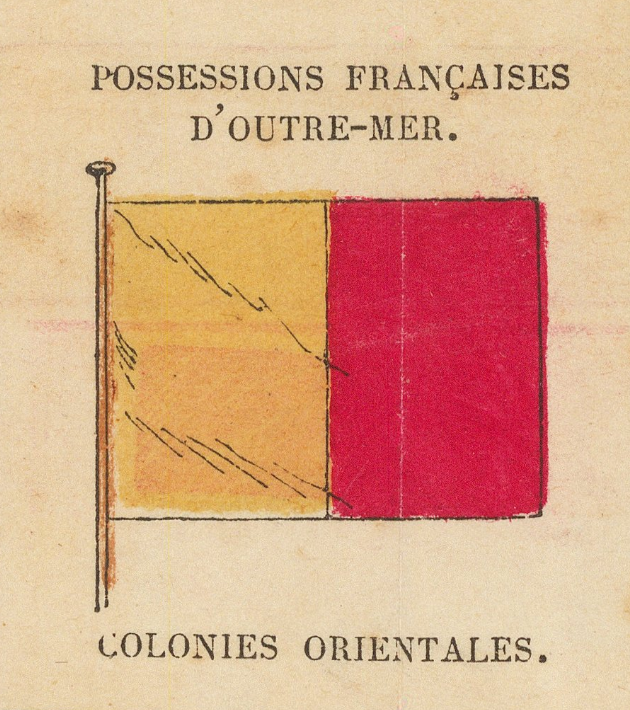
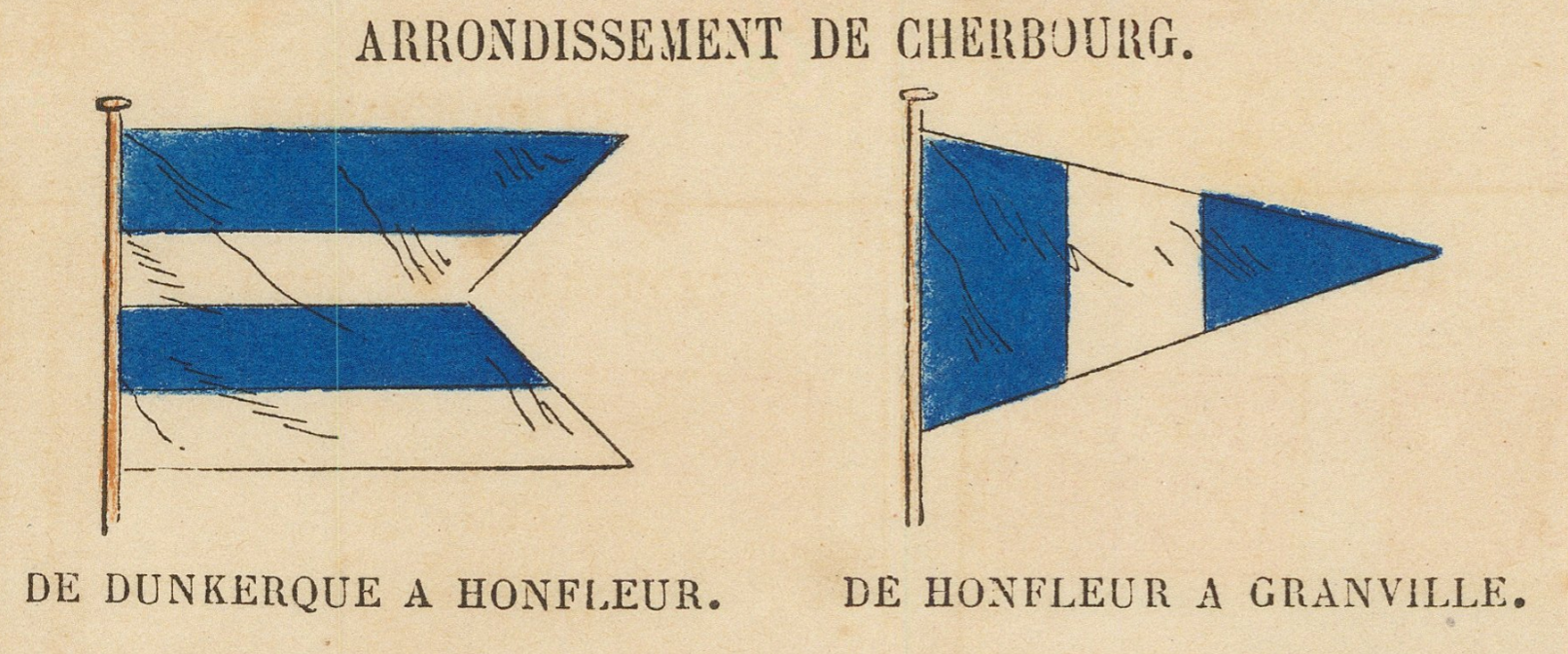
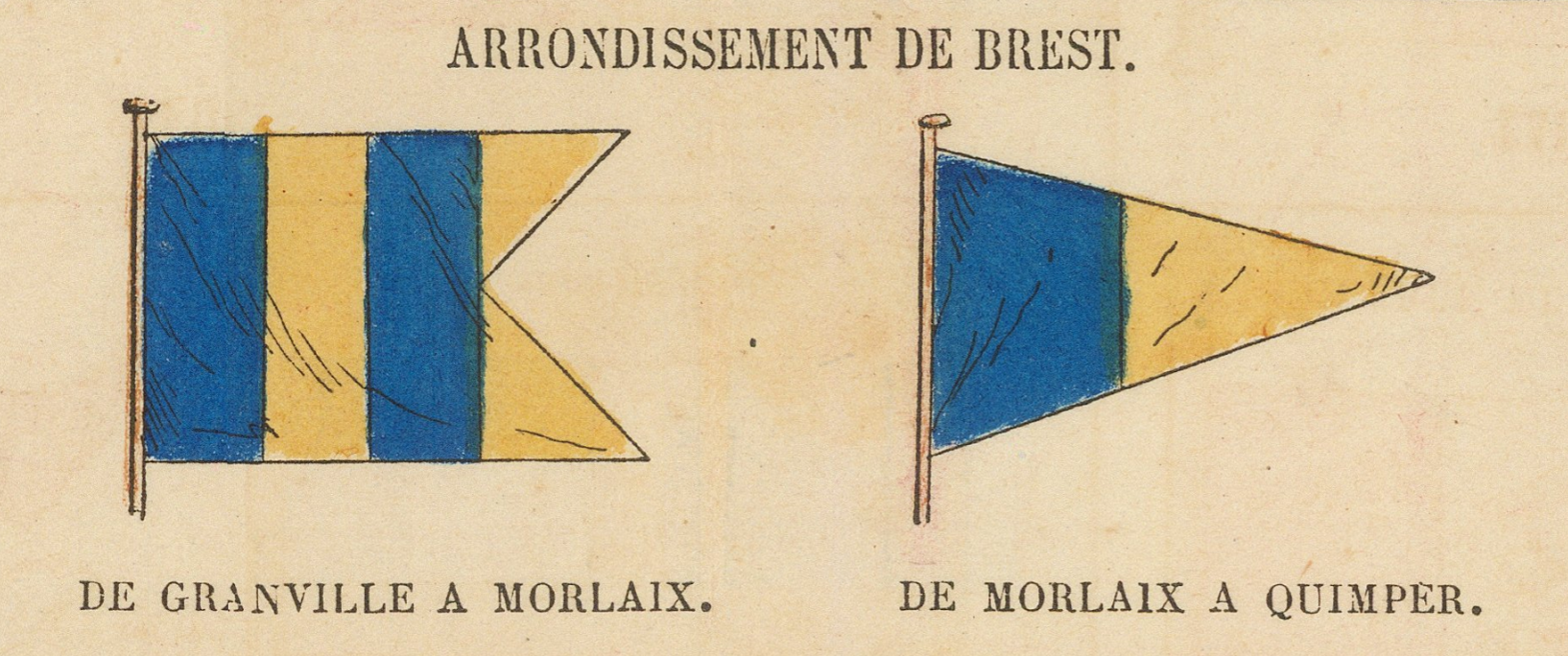
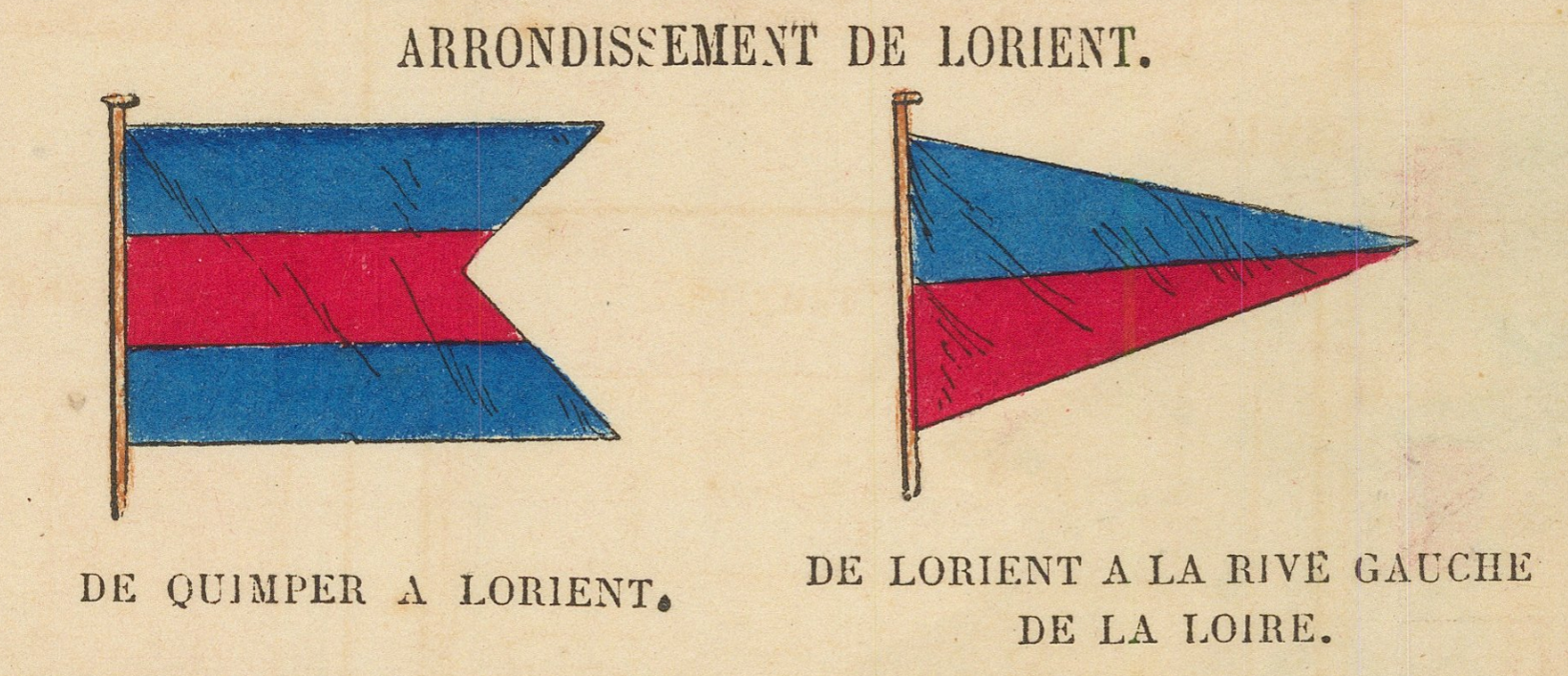
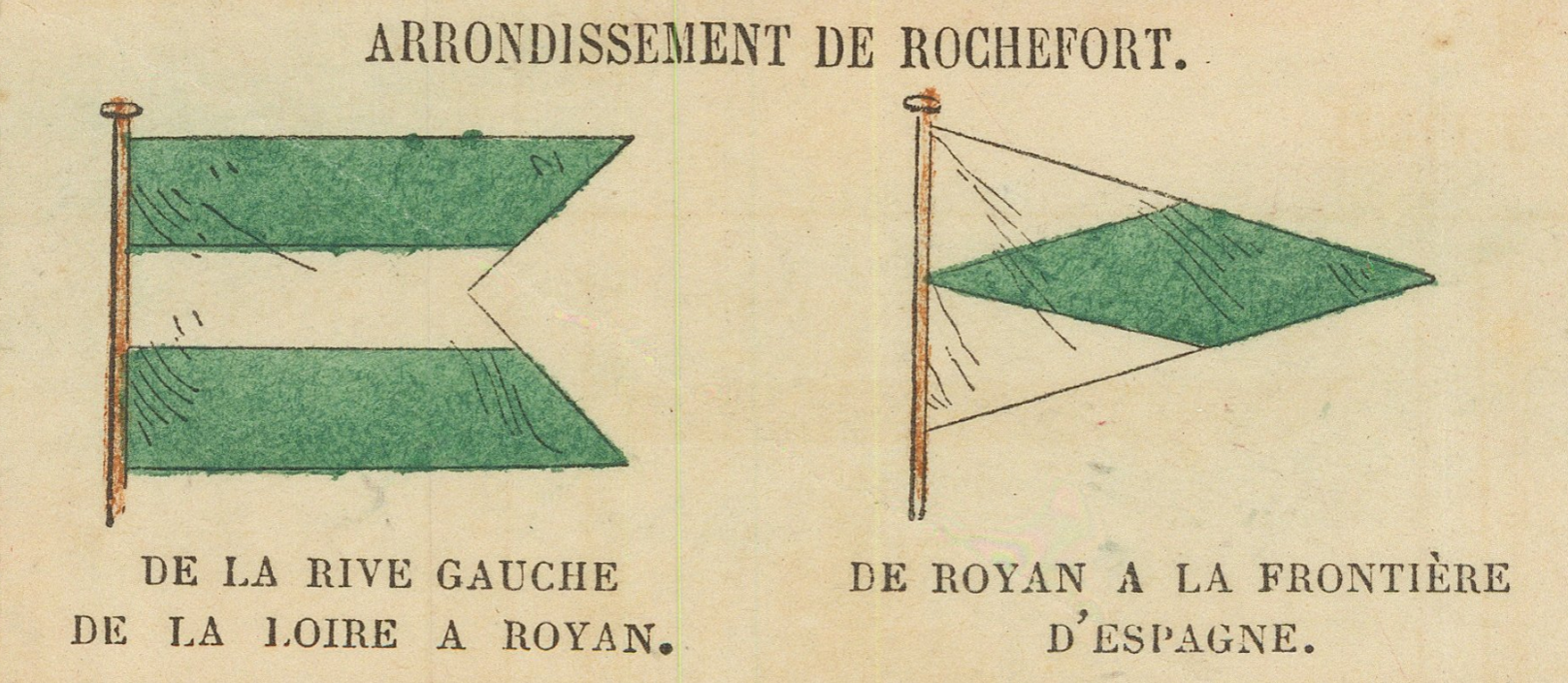
Puissances étrangères
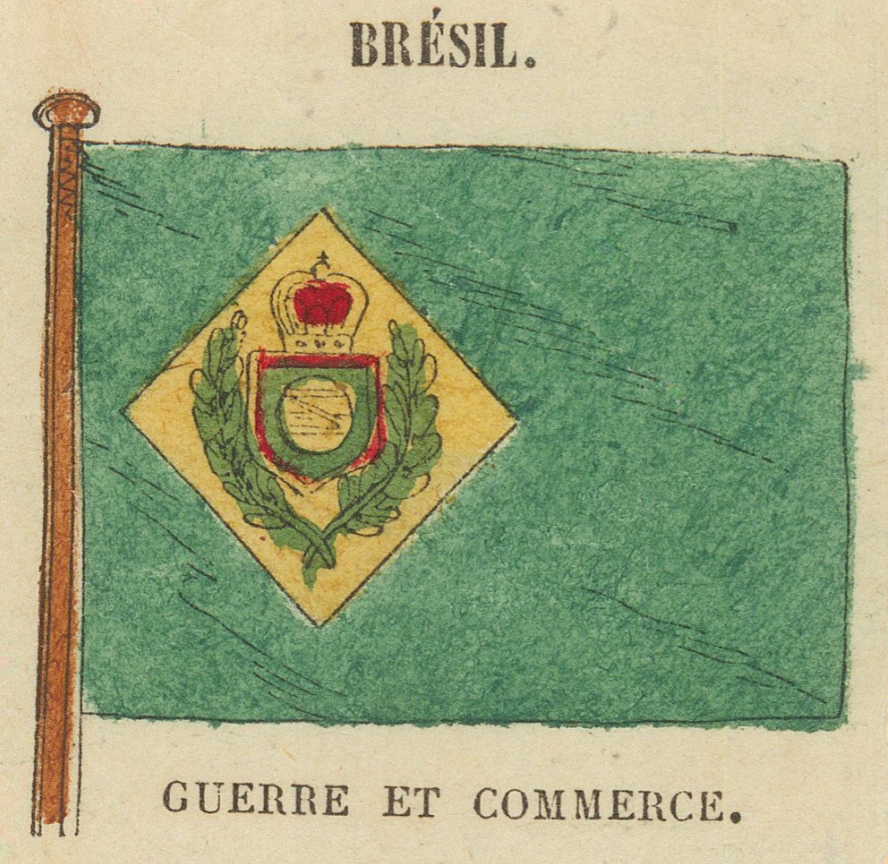
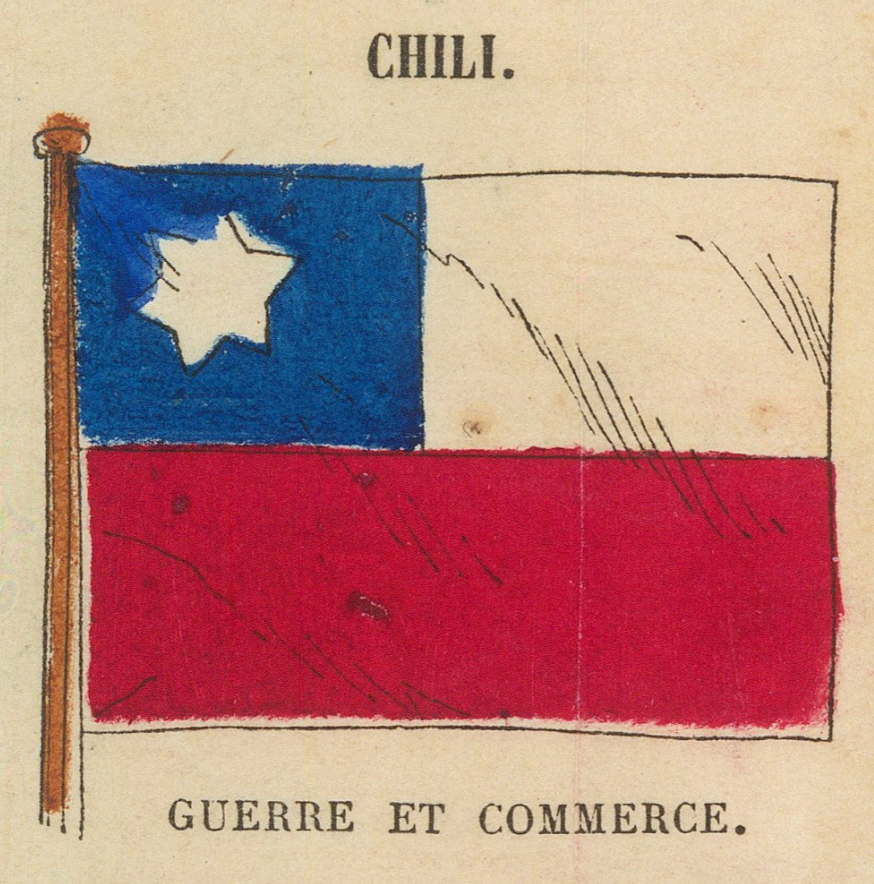
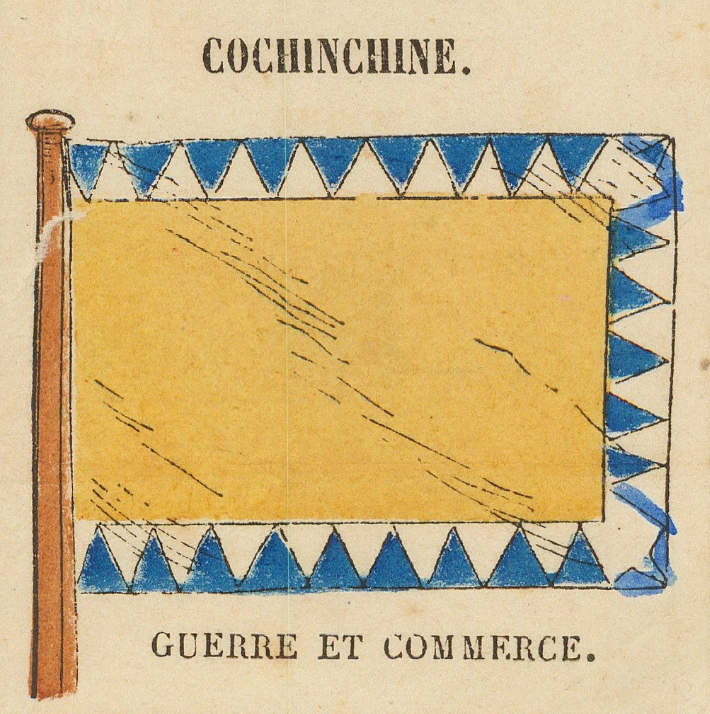
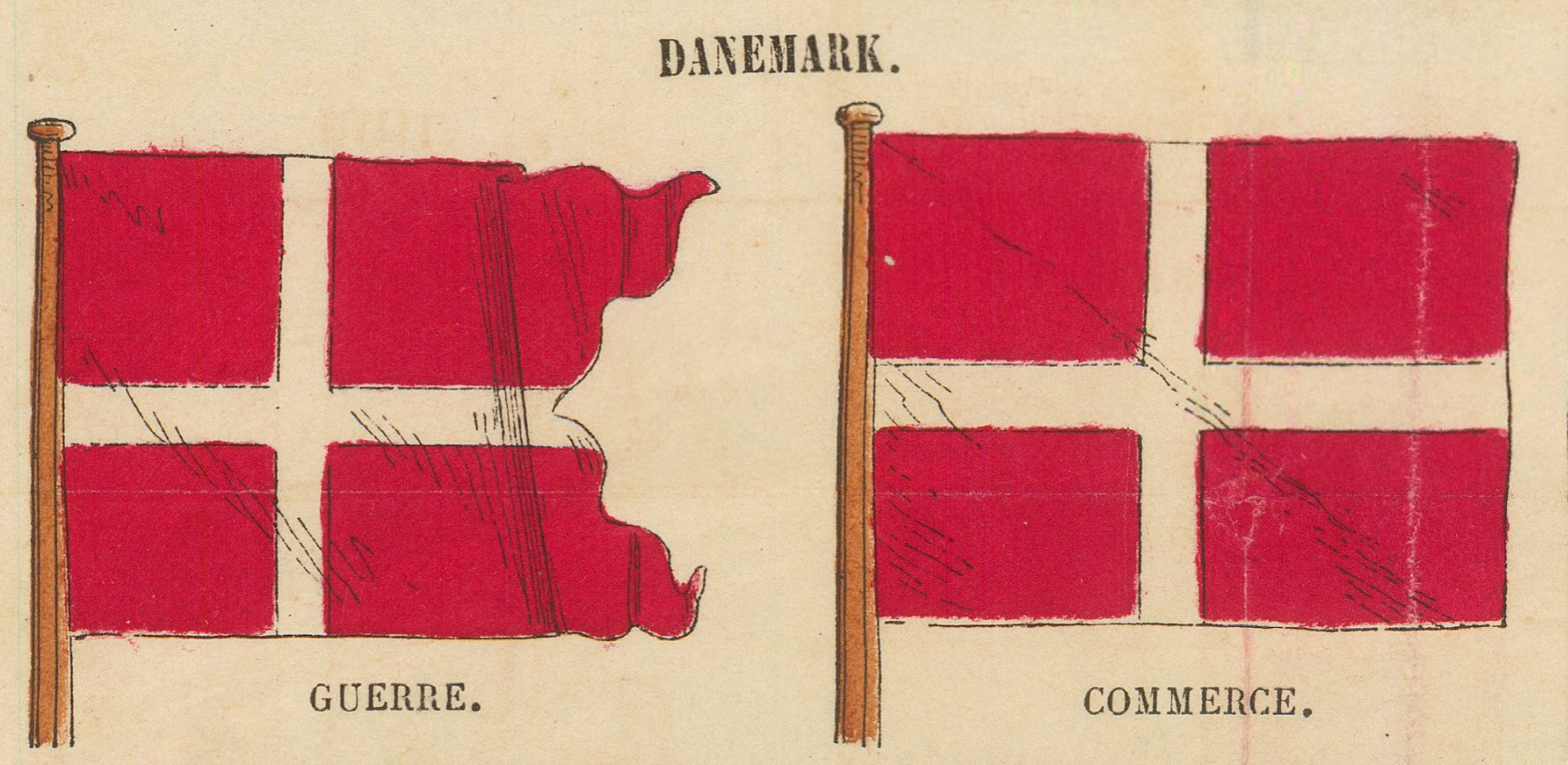
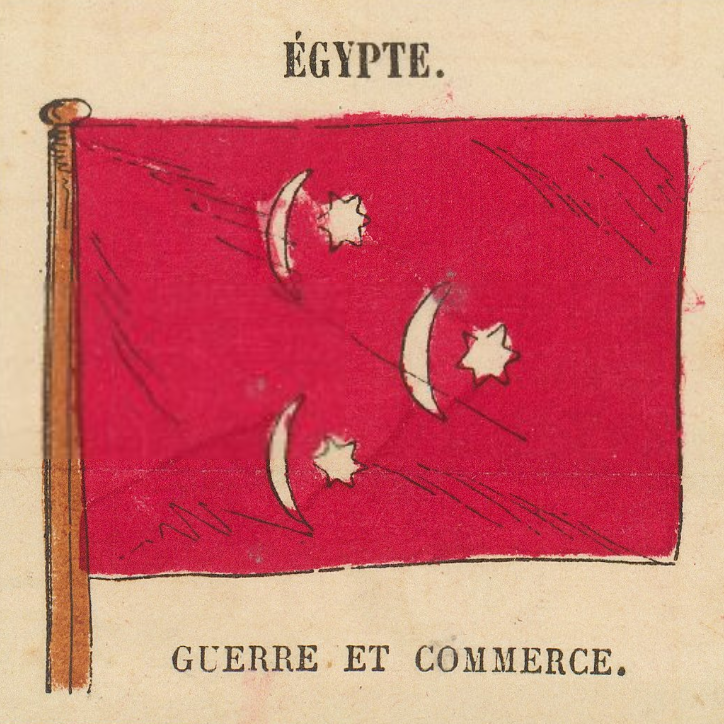
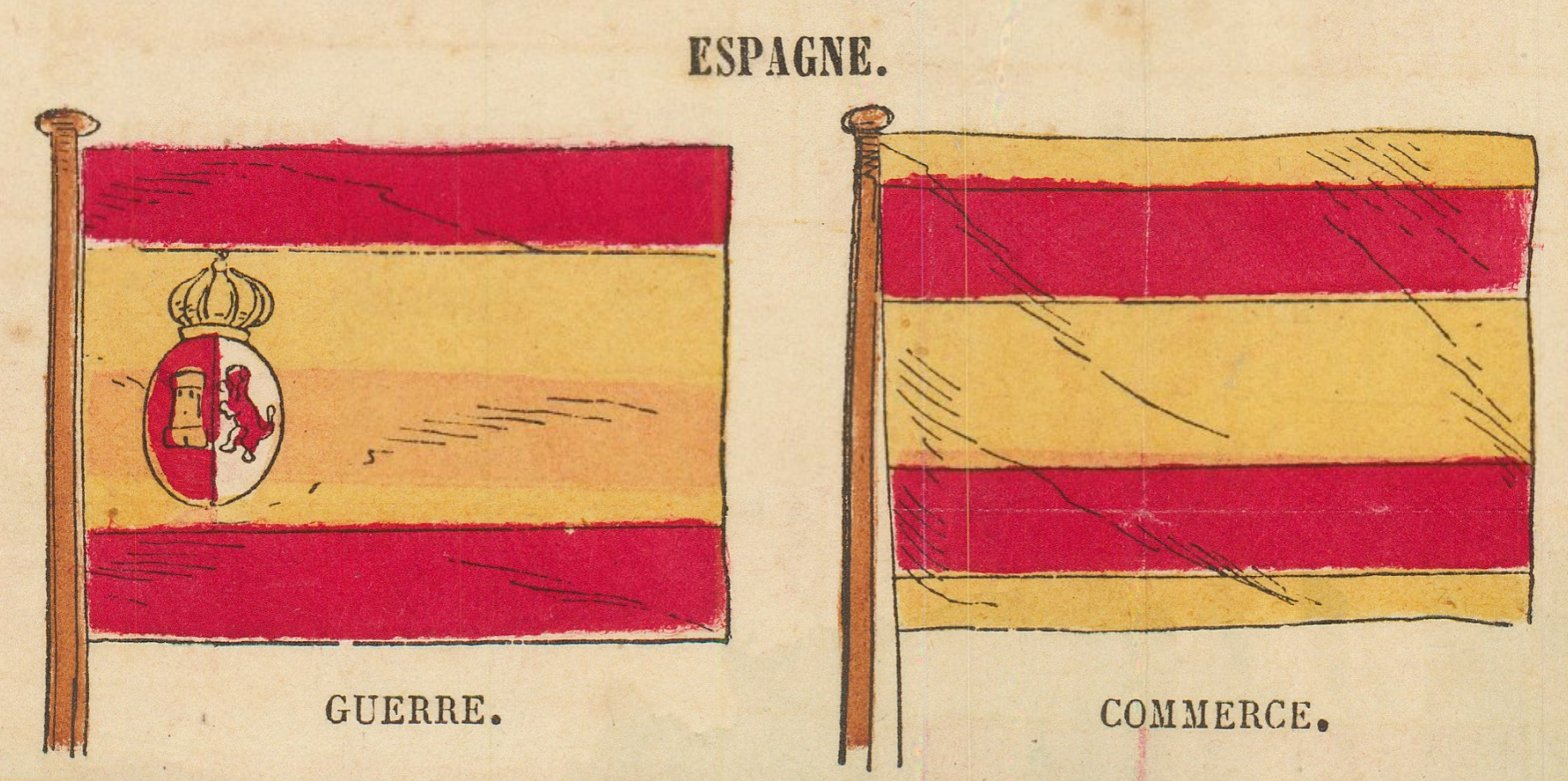
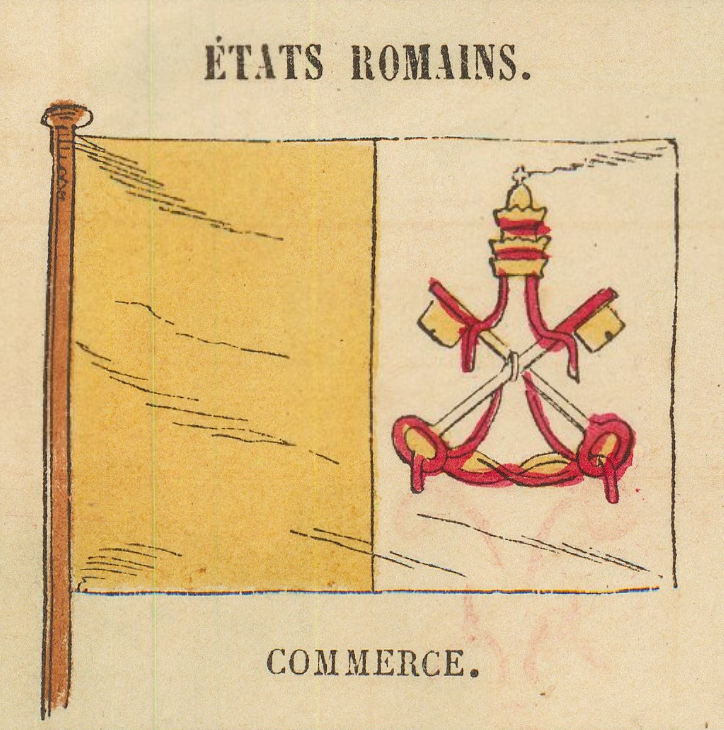
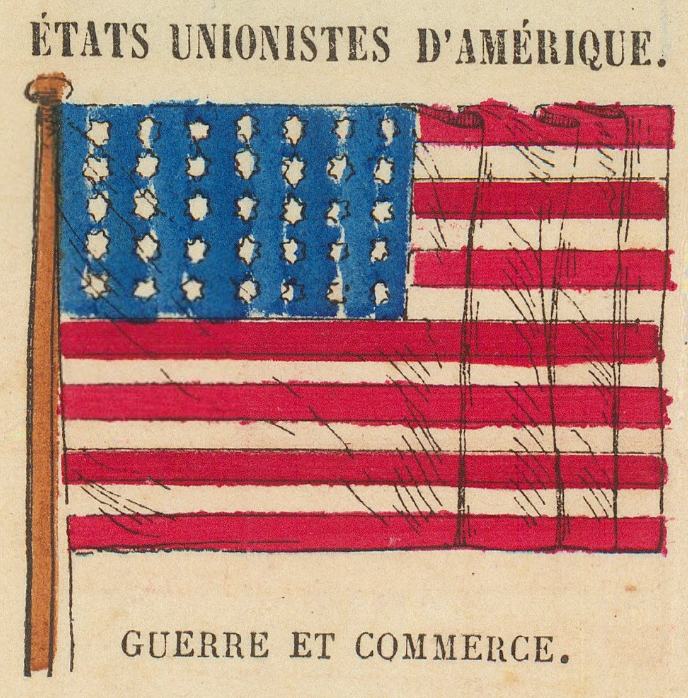
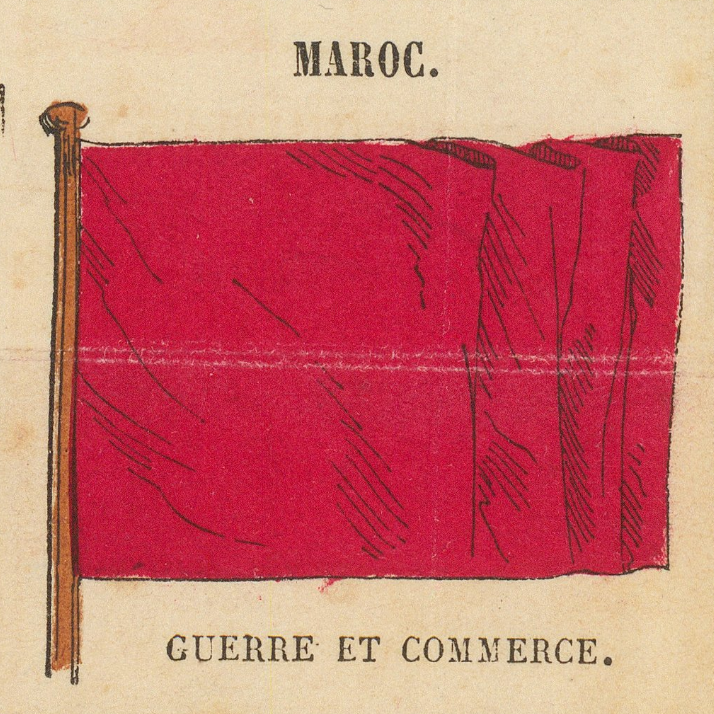
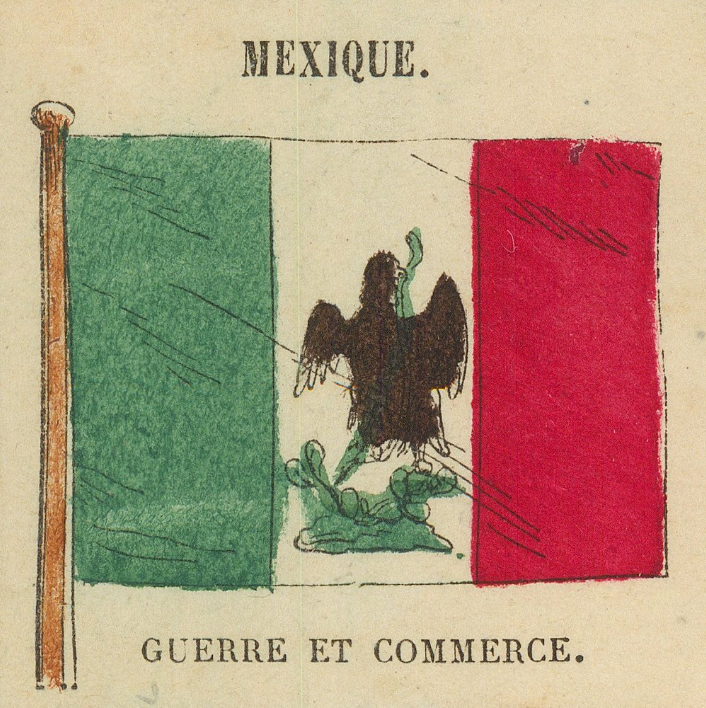
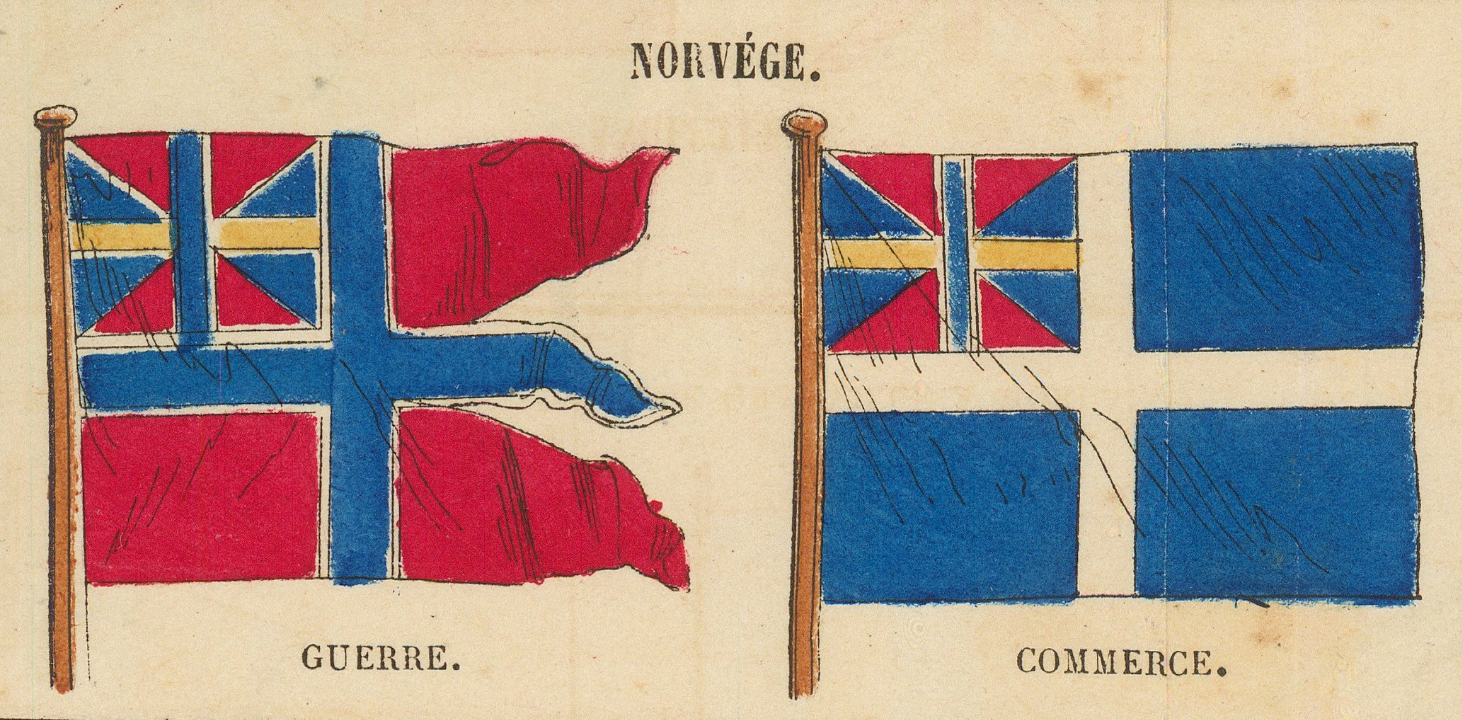
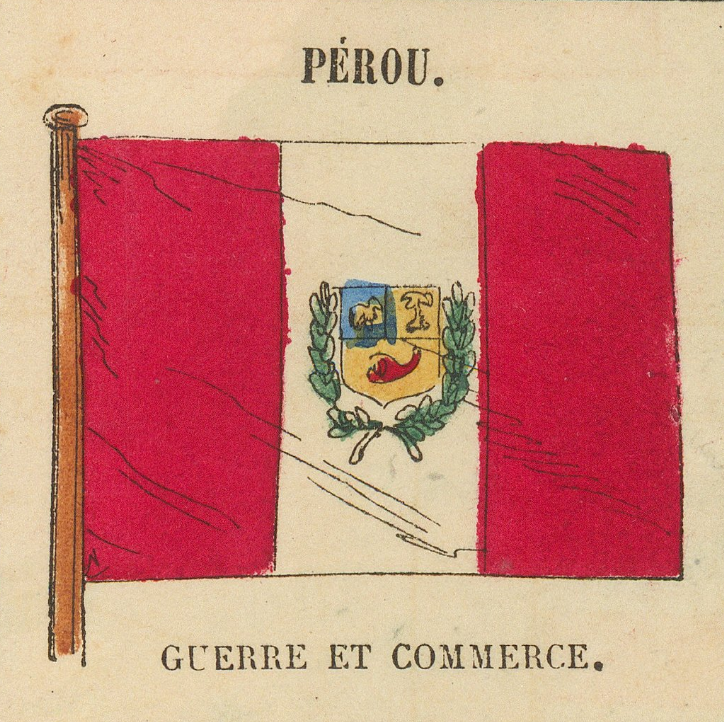
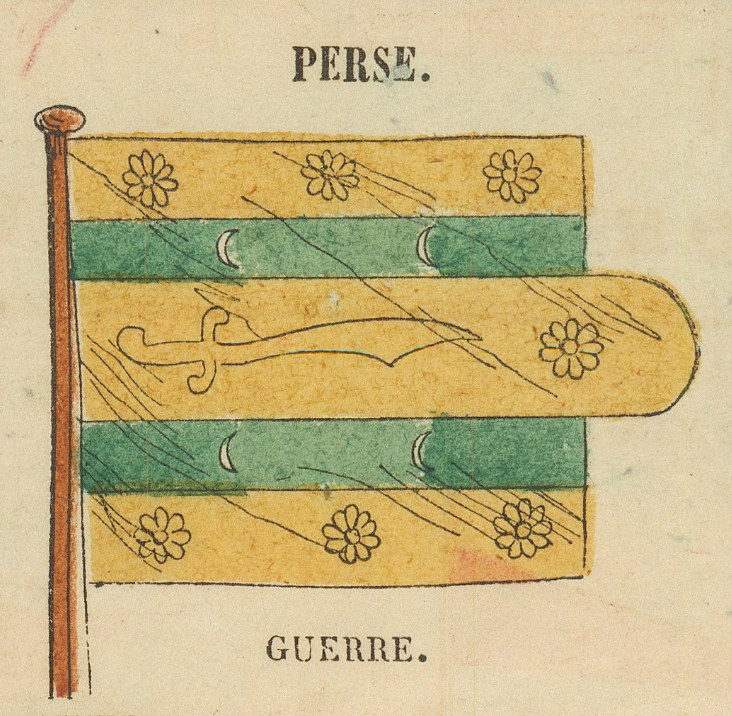
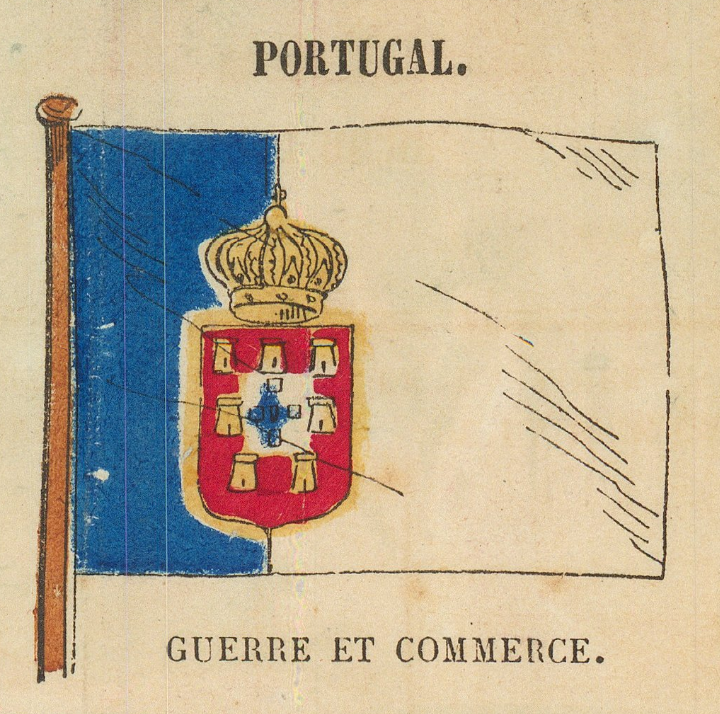
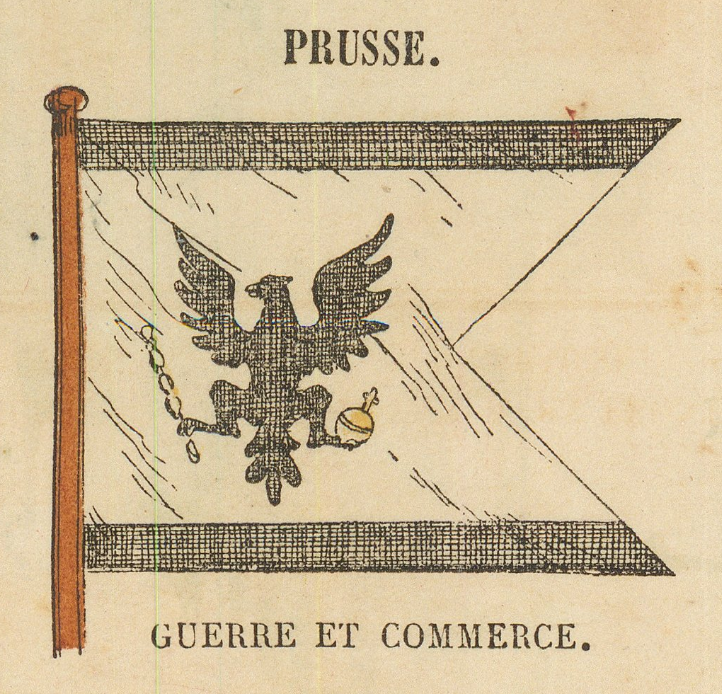
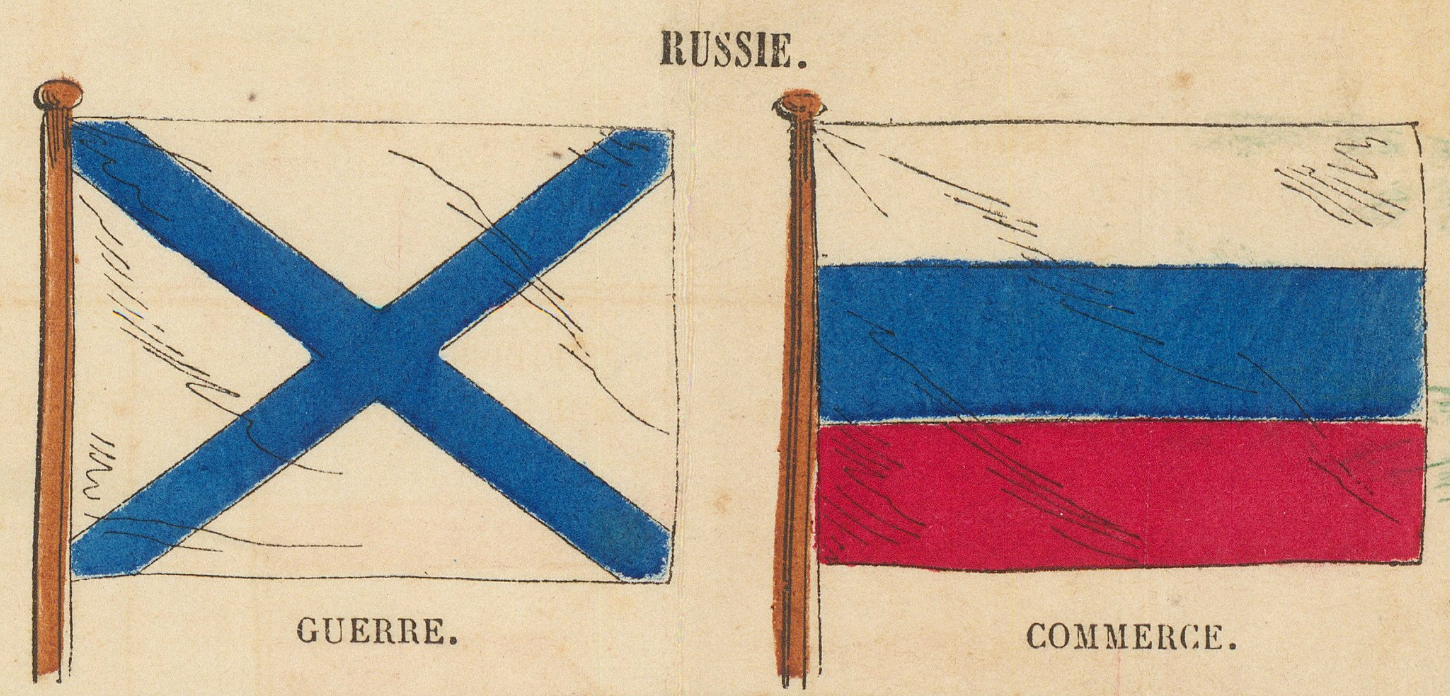
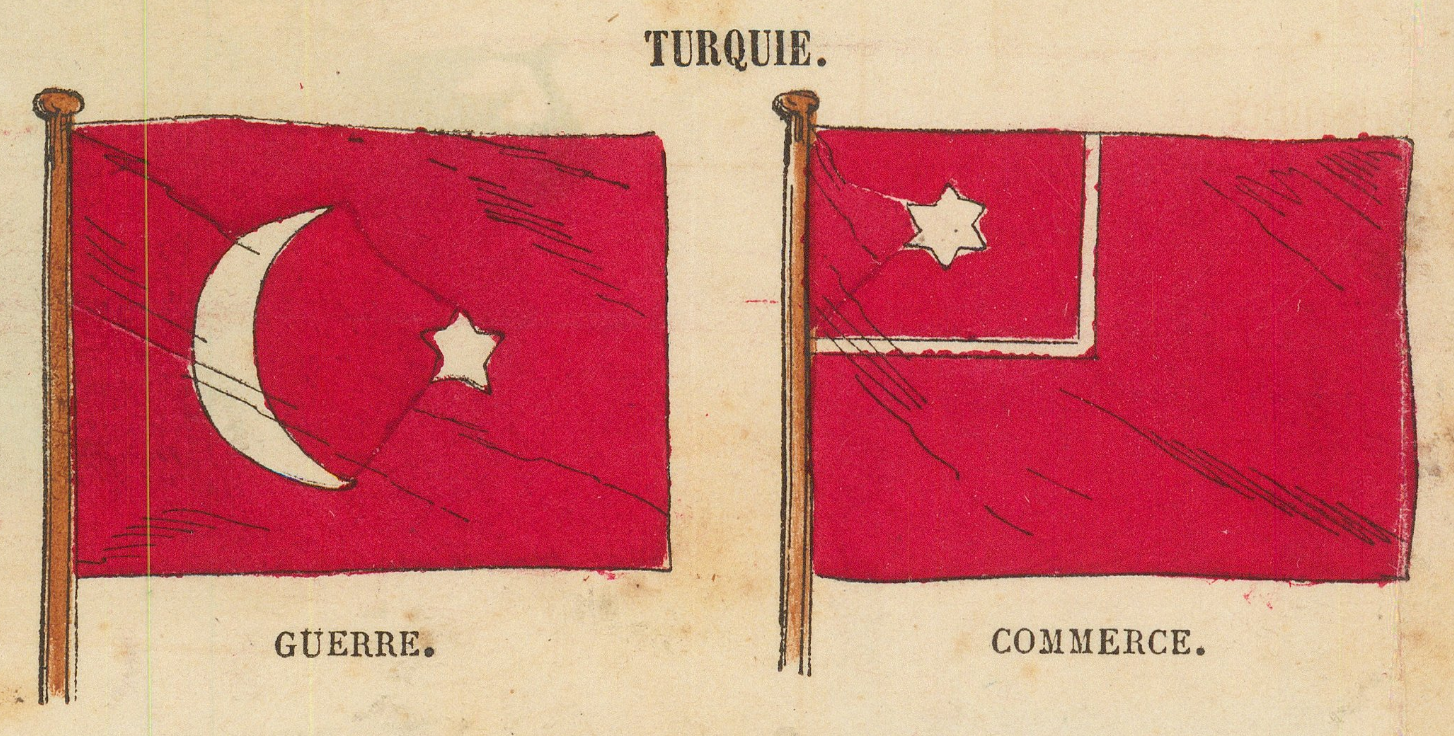
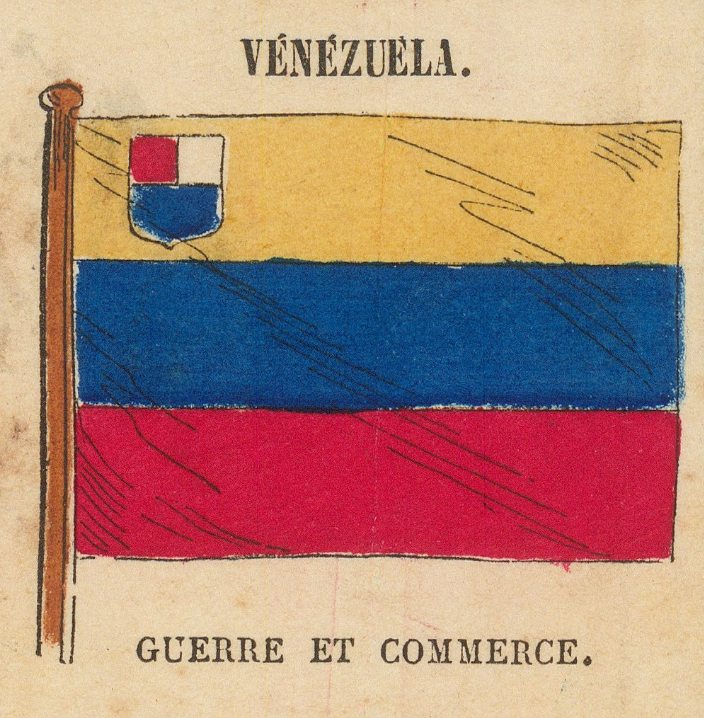
Method and Next Stage
The index above records what is on the plate before interpreting any of it. Study pages can then separate the printed attribution from the modern name of the polity, set each depiction against documented flag history, and account for differences in colour, proportion, geometry, or status.
Several entries ask for that treatment. The Sandwich Islands are described as a protectorate of England; Cochinchine is given a bordered yellow flag; the British ensigns are labelled by squadron (escadre). None of these should be taken at face value.
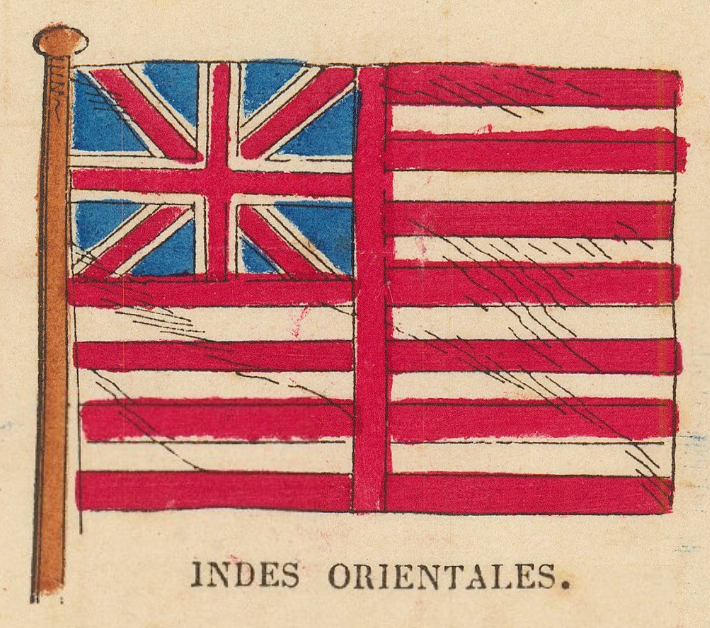
Two panels have been carried further. The Sandwich Islands panel is examined on the Hawaii (Sandwich Islands) polity page, which sets this plate's depiction beside the documented history of the flag; the Indes orientales panel joins the East India Company ensign page, where it turns out to repeat the 1837 Paris sheet stripe for stripe while quietly dropping the Company from its caption.
Bibliographic References
- Pavillons des principales puissances, complete plate in the present collection; title, series, publisher, addresses, and printer transcribed from the sheet.
- WorldCat record for Encyclopédie militaire et maritime: Dictionnaire des armées de terre et de mer. Related 1868 edition.
- Digitized Encyclopédie militaire et maritime record. Google Books, related 1865 edition.
© Encyclopaediae. Open educational reference project.